Friday, February 23, 2007

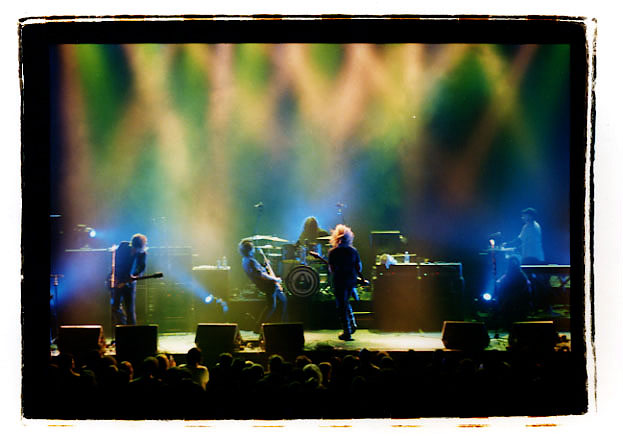
Camera Obscura Live @ El Rey, 2/17/07


“My, you’re such a polite crowd,” marveled Camera Obscura’s diminutive singer, Tracyanne Campbell, a few songs into their set. “It’s almost like you’re afraid to let go or something.” She must’ve just missed the memo: Quiet is the new loud. Somewhere between the latest DJ mashup and yet another remix on cocaine, a sizable contingent of America’s youth has made a conscious move to turn down the volume and take it easy with lilting melodies and some comfortable nostalgia on the side. This was never more evident than at the extremely sold-out Camera Obscura show, where eager twee neophytes (tweeophytes?) piled into the El Rey armed with sketchbooks and limited-edition vinyl 7-inches in homage to their gentle Scottish heroes.

Openers Portastatic set the subdued tone. Led by Mac McCaughan from ’90s college-rock stalwarts Superchunk, tonight the band stripped down to a duo of McCaughan and violinist Margaret White. Still, their ramshackle spirit shone through well-crafted songs invoking early Springsteen (and maybe a little Pavement without the big words). The cover of Prefab Sprout’s “When Love Breaks Down” was a nice touch.

But tonight belonged to Camera Obscura, who settled into a placid and alt-countrified groove for most of the show. Strumming through older songs like “Suspended From Class” and recent B-side “Lemon Juice and Paper Cuts,” the band primed an enchanted audience for a shot of their more up-tempo tunes. An enamored fan bought the band a round of drinks as encouragement. When they finally delivered, they delivered big. As they charged through “If Looks Could Kill” and fan favorite “Lloyd, I’m Ready to Be Heartbroken,” their clever blend of Motown, Burt Bacharach and late ’80s Britpop (think the Smiths and Sundays) was undeniably glorious. Ending with a blissed-out take on “Razzle Dazzle Rose,” Camera Obscura proved that it’s safe to put away those Belle & Sebastian comparisons once and for all. They’ve got their own kind of quiet going on.

(Originally published in the LA Weekly, 2/07)

Wednesday, February 14, 2007

Weird Science: Electric Indie Land

“I'm influenced by a lot of the current European remixers and producers, like Justice and Does It Offend You, Yeah?” says Steve Aoki, one half of L.A. DJ/production duo Weird Science but better known as ubiquitous celebrity DJ Kid Millionaire and owner of the relentlessly cool Dim Mak label. He's going on about the current proliferation of quirky superclub dance tracks coming from overseas, with a particular appeal for the American hipster party scene. “But sometimes the music from Europe is way too out there for most crowds. We always want our sound to be really catchy and simple. There are only a few North American acts that really combine forward sounds with memorable melodies, like Junior Sanchez and MSTRKRFT. I want to produce remixes that anyone can play out.”

Taking a spin through the duo's growing catalog of reworks for the likes of Bloc Party, Peaches and Mindless Self-Indulgence, their simple-but-catchy ethos is readily apparent. “Our sound has an indie-rock sensibility, since that's where we both came from,” reasons Blake Miller, the other half of Weird Science, who's also the singer/guitarist for scrappy L.A. post-punk outfit Moving Units. “Besides the aesthetic, the best thing about indie-rock is just good songs. It's essential that our music have really sick hooks. The other thing is that people's tastes have become so diverse. It's cool to be able to marry indie-rock songs with dirty electro beats.”

“Ultimately, it's all about getting people to just go off at a party,” Aoki surmises. “We want to see people freaking out on the dancefloor.”

Both take pride in their relative lack of experience on the decks and behind the production board but are exceedingly confident in their abilities to churn out bomb tracks, with a full-length album expected in 2007 featuring guest vocals from the likes of French crooner Uffie, Lady Tigra from '80s electro-rappers L'Trimm and Steve Bay from new wave rockers Hot Hot Heat.

“Not to geek out, but my favorite piece of gear is an old Roland W-30 sampling workstation. I've never seen anyone else use one, but I love it,” Miller raves. “The sample memory is really limited, and when you sample at that rate, it has a really trashy, cheap sound to it. We like to take certain vocals, chop them up and repeat them throughout the track. It's become something of a signature. I can't think of any plug-in that could replicate that sound. I like bastardizing technology to get really awesome results. That's kind of our approach in general. We try to rely on our imagination and just force cool things to happen that aren't necessarily conventional.”

(Originally published in Remix, 1/07)

Sunday, February 11, 2007

Albert Hammond Jr. at the Troubadour, Feb. 14


It’s like the Strokes with a double shot of sugar on top when their mop-topped six-string slinger Albert Hammond Jr. kicks it on the solo tip. Familiar are his clear-eyed and thematic guitar lines intertwined with rhythmic and jangle-heavy riffing, but his eager, optimistic vocal style and hopeful lyricism are a far cry from Julian Casablanca’s world-weary mutterings. Junior’s solo LP, Yours to Keep, is a giddy collection of feel-good power-pop rock that strikes a charming balance between Is This It? and Get the Knack. Taking a night off from wooing the alterna-teen set by opening for Incubus on their current tour, Hammond hits L.A. right in the heart with this Valentine’s night one-off for hipsters in love (or those who at least still believe in it). Now c’mon and get happy!

(Originally published in the LA Weekly, 2/07)

Friday, February 09, 2007

The Nightwatchman at Hotel Café Los Angeles, Tuesday Night Residency


Guitar star Tom Morello is best known for intergalactic riffs and the uncanny ability to make his six-string sound like everything from scratching turntables to charging elephants, first with Rage Against The Machine and now Audioslave. As The Nightwatchman, this fervent political activist shows that there’s more than one way to take the power back. Instead of his customary bombast, Morello makes a folksy acoustic turn, crafting stark, plaintive musings akin to Woody Guthrie and even Johnny Cash. Although with his deep, baritone croon, Morello’s solo vocalizing can sound eerily reminiscent of Leonard Cohen. His past Hotel Café shows have been benefits for such outreach collectives as Food Not Bombs and his own Axis of Justice, while friends like Perry Farrell and Serj Tankian often join him onstage, so anything’s possible.

(Originally published in the LA Weekly, 1/07)

Wednesday, February 07, 2007

Peanut Butter Wolf: Sittin' on Chrome


At a packed Mexican restaurant deep in the hipster Los Angeles neighborhood known as Los Feliz, Peanut Butter Wolf looks down at his plate of steak and beans and lets out a heavy sigh. It’s a sigh that’s equal parts fatigue, frustration and a mind-numbing familiarity. It’s understandable, given that he’s only a couple of days back from a tour of Japan (“with Japan, we can really go all over the place in our DJ sets. They’re not nearly as influenced by the radio or whatever”), only to jump back into the studio to finish up work on a new round of remixes for his Stones Throw label. He’s a man of few words, someone who obviously prefers to let the panoramic array of music put out through his imprint do the talking.

He’s here to promote his new mix CD Chrome Children, an impressive compilation of rare and unreleased tracks to celebrate the label being in existence for an entire decade. In those ten years, he’s gone from the “one weird kid into weird music” in San Jose, CA to starting Stones Throw, relocating to LA, discovering multi-aliased production star-child Madlib and having another legendary producer, the late Jay Dee, come calling to be down with the team.

Given so much pioneering and impeccable tastes, the same question hangs ominously over the table, the bustling eatery humming with laughter and conversation – why isn’t Stones Throw Records a household name?

“It’s funny when we look at pictures of the crowds from our shows. There are maybe two or three girls. It’s all dudes,” he intones between bites. “We were going to call this upcoming shows the ‘Wall to Wall Balls’ tour, but decided against it. We definitely want more girls to listen to our stuff.”

Therein lies the answer. Stones Throw deals in the music of obsessive music maniacs, the crate-digging completists consumed with the rarest of rare breaks and vinyl sides. These people are almost all guys, and the last thing they want is their favorites to become common knowledge. That would ruin all of the fun.

“We played a prank on Egon,” he relates in regards to the label’s prolific funk fanatic, general manager and man behind subsidiary imprints like Now Again. “He had an original copy of The Highlighters’ 45 ‘The Funky 16 Corners,’ and we scanned the label and pasted in over one of our own 45s. We’re in his room and I’m bending it back and forth until it snapped in half right in front of his face. His jaw just dropped and he started screaming like a crazy man. That was hilarious.”

He’s far more serious when talking about the label’s flagship artist Madlib. “I really want to do a documentary on him. That’s my next personal goal. He’s just fascinating as a person. He’s down to earth, yet he’s in his own world. We’re a lot alike, even though he’s a million times more talented than me. He’s definitely my brother from another mother.”

While Stones Throw has become one of America’s premier indie hip-hop labels, it’s hard to overlook the range of sounds they actually produce, from the freaked-out lo-fi new wave of Baron Zen (his cover of Katrina & The Waves’ “Walking on Sunshine” is priceless) to the experimental electronic excursions of Koushik. This is much more than just a bunch of boom-bap.

“The common thread is that most of it is really dirty, gutter-sounding shit,” he says finally before tossing me a copy of his notorious “666” heavy metal mix (featuring the likes of Morbid Angel and Cannibal Corpse) and high-tailing it back to his beloved studio. “Some of my favorite stuff was recorded on four-track.” Long live analog.

(Originally published in BPM Magazine, 1/07)

Sunday, February 04, 2007

Aaron LaCrate: Digging Deeper


For the uninitiated, the definition of “Baltimore club music” can be a hazy one. Hard dance beats underneath equally hard raps peppered with hip-hop and R&B loops, it’s an inner city sound that’s serious about making you dance.

“It goes back, back before Baltimore club records were even being made,” remembers DJ/producer Aaron LaCrate of his hometown’s nightlife history. He’s fresh from supporting UK pop queen Lily Allen on her first American tour and in a reflective mood. “In the early ’80s, Baltimore’s nightclub scene was flourishing. There were a lot of different options. DJs were playing a mix of Chicago house, New York house, Miami bass and a lot of UK breakbeat records. That’s what was big in the ghettos of Baltimore. That’s kind of the genesis of the Baltimore Club scene, that weird blend of crazy hard dance records for a really diverse crowd.”

Having been a part of that scene since the tender age of 13, LaCrate has carved himself an enviable position in the DJ scene. He’s regularly spinning high-profile parties from London to Japan while scoring choice remixing gigs for pals like Allen, but maintaining a fierce allegiance to his hometown, personified in his patented “Gutter Music” sound.

“I’ve always kept in touch with the original guys like Scottie B,” he says of the Baltimore club first wave elite. “I was the one kid much younger than them that was traveling all of the time, while they would stay home. I would report back to them how much people in London loved their music. It started with Scottie and I putting out a record, and then me getting involved with people like Spank Rock, Amanda Blank and DJ Low Budget from Hollertronix. The whole idea was just my way to bridge the gap between the old school and the younger generation.”

On regards to his own productions, LaCrate hooked up with Baltimore club producer Debonair Samir to make his signature single “Blow,” which came together in record time. “From beginning to end, that song took about 15 minutes to make. Samir and I wrote and recorded the track in Reason, and then laid everything out in ProTools. The vocal parts were chopped up in Cool Edit. I ended up signing Samir to be the in-house producer for my label, Milkcrate Records. I’m a DJ, and I know how I want things to sound. He’s got the more technical aspects covered.”

For 2007, LaCrate wants to “take the Baltimore sound even further. I’m not just about looping up breaks. There’s a whole new genre of uptempo dance music happening all over the world, and this city is a large part of that. ”

(Originally published in Remix, 01/07)

Thursday, February 01, 2007

Moving Units, Test Your Reflex at the Troubadour, Saturday February 3


It’s time to bust out your best striped finery and freshen up those asymmetrical coifs — L.A.’s favorite misfit kidz are back and bouncier than ever. Not that disco-wave revivalists Moving Units couldn’t get the dirty pretty things all wet and wild before. But now that primary Unit Blake Miller has done ample time searching for the perfect beat as half of so-hip-it-hurts DJ duo Weird Science with Kid Aoki, there’s no telling what kind of body-rocking bass blasts will erupt amid this gang of three’s signature serpentine guitar lines and sizzling high-hat histrionics. Nearly three years have passed since their last record, so this should be a good barometer of what to expect. SoCal teen dream-rockers Test Your Reflex put the emo in Duran Duran. Tonight we’re gonna party like it’s 1983!

(Originally published in the LA Weekly, 2/07)

Wednesday, January 24, 2007

DISCO D: 1980-2007


Rest In Peace...

Tuesday, January 23, 2007

SCISSOR SISTERS: HERE’S TO FUTURE DAYS


“Have you heard the band Hellogoodbye yet? A friend just gave me the CD, and I can’t tell if it’s wonderful or really terrible. But I just love it. The single sounds like Eiffel 65 with robo-Cher vocals and everything. The best part is that it’s completely unashamed. They’re my favorite band right now.”

Jake Spears, lead singer and songwriter for New York disco-pop sensations Scissor Sisters is on a break from filming the video for “Land of a Thousand Words,” the second single off their hotly anticipated sophomore album, appropriately titled Ta-Dah. His unabashed enthusiasm for the goofy Southern California power pop combo HelloGoodbye (fresh from the dubious notoriety of being featured on MTV’s The Real World: Austin) and their spastic song “Touchdown Turnaround” is endearing. It’s also an apt metaphor for the Scissor Sisters themselves.

For more than 30 years, we’ve heard countless bands shamelessly pay tribute to rock icons of the ’70s like Led Zeppelin and Aerosmith. The Scissor Sisters defiantly flaunt inspirations from the flipside of that decade’s other biggest acts, like Abba, the Bee Gees and Elton John. Insanely catchy choruses, throbbing, beat-heavy production, and gleefully flamboyant imagery have served the Scissor Sisters well.

First shaking the scene with their inspired dance-floor rework of Pink Floyd classic “Comfortably Numb” (lauded by none less than Floyd’s own David Gilmour and Roger Waters), they went on to sell more than 300,000 copies of their eponymous debut album in America to an impressively panoramic fan base.

“TV really helped us out here in America,” Shears admits. “We played Saturday Night Live, and sold a bunch of albums to cool people in their twenties. But then we did Regis and Kelly, and suddenly soccer moms were getting into us, too. Still, there were certain big shows that simply refused to have us on, for whatever reason. I won’t name any names, but I will say that there are people in power positions here that won’t give us the same chances that we had in the UK.”

In the UK, that same debut album exploded, going on to become the best-selling album of 2004. The band’s first show on British soil was opening for Duran Duran at the massive Wembley Arena. Elton John became one of their biggest cheerleaders, and soon they were sweeping the top honors at the 2005 Brit Awards (think the English Grammys) and opening shows for U2.

“The UK is just more open to art. It’s a part of everyday living,” theorizes singer Ana Matronic, who saunters into the conversation for some relief of “having so many hands in my face all day” during the day’s video shoot. “I feel like our success over there was based on so many people seeing us live and loving it. It’s in concert that we really make sense. To them, we’re like a return to a certain era of glamour. And they love a good pop tune.”

With such success, of course, comes the pressure and heightened expectations to maintain the upward trajectory. There are plenty of acts that made a big splash with their debuts, only to buckle under the stress of the second album. Such anxieties were hardly lost on Spears.

“It’s a very scary thing, making a record following something as successful as the first album. You can’t help but always compare,” he’s quick to admit. “Suddenly, there’s so much at stake. I have passion for performing and making music; I love it and it’s my livelihood. The thought of that ever being taken away is really horrifying, and it’s a sensation that sort of stayed with me. It took us a year to write this record, which is a really long time. And that’s for no lack of working. We were in the studio every day.”

When that period of “songwriting frustration” threatened to overwhelm Spears, the antidote came in the form of a lucid dream starring… Paul McCartney?

“I have really vivid dreams, and I always take note of them. I had this dream one night about (McCartney), where we had a conversation about songwriting that was something of an epiphany. I wrote down what he’d said to me as soon as I woke up. I was really inspired, and we wrote the song that day,” he explains of the high-energy dance track they named after the former Beatle. “It’s about inspiration, and the telepathic power between a creative person and whoever’s on the other end receiving it. There’s a kind of telepathic relation that happens when you read a book or listen to a song. It’s a long chain that never stops.”

McCartney’s advice seems to have paid off. Ta-Dah is a fleshed-out realization of their debut’s promise, rife with upbeat rug burners and more introspective, melancholy moments. It’s hard to deny the instant appeal of tunes like first single “Don’t Feel Like Dancin’,” a hook-laden stomp of piano-powered mega-pop co-written with none less than Elton John himself.

“Deep down in our hearts, we wanted to make a great pop song together,” says Spears of working with John. “When we got it, we knew it. But it took us a while to get there. It wasn’t like we just banged it out. We really had to work at it.”

“Elton is one of those special people,” adds Matronic. “Music just pours through him. Working with someone like him was crazy and amazing, but everything that’s happened to this band so far as been crazy and amazing, so we just went with it.”

“The album is about expectations, what we expect out of life, and never taking those things or the people around you for granted,” Spears muses when asked about the new album’s deeper meanings. “There was a lot of love on the record, but there was a lot of death around us, too. My sweet aunt Hilda and my best friend in the whole world both died while we were recording, and one of (guitarist) Del’s best friends died, too. It was a pretty heavy period for us. You give up big parts of your life to do this, but you do it anyway because it’s so fulfilling. That’s kind of where the title comes from, saying ‘this is it.’ It’s very kind of depressing, but really beautiful at the same time. I think those tragic moments are very integral to music.

“I love this record, but I’m not satisfied by it,” he says finally. “But I’m never satisfied. I wasn’t satisfied with the first album. I always thought it was a partial piece of crap. I’m a really harsh critic, but I think you’ve gotta be if you’re doing this and want to make something that people think is great. I gave my all to it, but I plan on making better records in the future. To me, Ta-Dah sounds like a record by a band that’s got a future.”

(Originally published as a cover story for BPM Magazine, Winter 2006)

Thursday, January 18, 2007

Deerhoof, Hella & Busdriver at El Rey Theatre, Wednesday, January 24


If you still need to scrape away those last stubborn, sticky bits of oh-six, entertain your brain with this soul-scrubbing sonic three-for-all. San Francisco’s Deerhoof have ascended the indie food chain by adroitly pingponging between dreamy experimentalism and quirky but pleasant pop darts. Survey says they’ve created their most coherent (and accessible) set yet with the forthcoming Friend Opportunity, led by the horn-blasted “+ 81,” a smiley smashup of White Stripes, Sonic Youth and Cibo Matto. NorCal’s Hella redefine post-metal riffery with their latest fuzzy math-meets-Nintendo freak-out, There’s No 666 in Outer Space, and probably the best drummer you’ve ever seen live, Zach Hill. L.A.’s own polysyllabic bebop-hop word-worker Busdriver digs deep into his mental thesaurus to dilate the pupils of your mind with his lightning lyrical histrionics, pulling from his freshly minted collection of existential rhymes, Roadkill Overcoat.

(Originally published in the LA Weekly, 1/07)

Wednesday, January 10, 2007

XXXCHANGE: SPANK ROCK JOCK


“Baltimore club was just a sound on the radio when I was growing up,” mumbles XXXChange (born Alex Upton), the production side of Baltimore's latest underground-gone-global sensation, Spank Rock. “I was more into a lot of hip-hop and anything out of the ordinary I could get my hands on.”

Originally a drummer who ended up in the New England Conservatory to study, XXXChange dropped out to make his way to New York City, where a chance run-in landed him a gig interning at the recording studio of DFA Records, home to such dance-centric indie acts as LCD Soundsystem and the Juan McClean.

“I didn't know that much about production at the time,” XXXChange continues sheepishly. “My experience with making music had only been on the computer, so when they asked me to clear the board my first day there, I didn't know what they were talking about. I did know how to play, so I was able to hang out and learn. It helped me get out of that strictly digital mindset and learn how to set up a microphone. A lot of people in my generation don't know how to do that. They can work Acid or Fruity Loops but are clueless when it comes to real engineering.”

When his internship at DFA didn't result in a full-time gig, he drifted through various odd jobs and toward making his own music with an older version of Pro Tools preloaded on a computer purchased from a former bandmate. It's the same $500 setup that he used to record Spank Rock's debut album, YoYoYoYoYo (Big Dada). Combining License to Ill-era Beastie Boys braggadocio with insistent, 130-plus bpm beats, the Spank Rock sound comes from a panoramic whirlwind of influences.

“Our stuff has a couple elements of club music, mixed with the weirder parts of post-punk rock and bits of people like Dizzee Rascal and that whole UK-garage scene,” XXXChange explains. “It's just us trying to fit all of our favorite music into something that's our own.”

When quizzed about his favorite gear, he's quick to hype Arturia software. “They make a clone of the old ARP 2600 that's great. It sounds really good, has a flexible sequencer, three oscillators and this whole weird matrix section. It's fun to use. It's on pretty much every track of the album.”

Already a few songs into the follow-up, XXXChange says to expect the same dirty Spank Rock energy with an added caveat. “The idea being the first album was to make rap music you can dance to. Now we want to do that with really tight song structures,” he muses. “We want to have bridges, choruses, that whole package. The next record will be a lot more structured in that way.”

(Originally published in Remix, 1/07)

JUSTICE: BIGGER THAN KANYE


Ten years ago, Daft Punk exploded out of France to conquer the world's dancefloor with its thrilling combination of Detroit techno, Chicago house and classic disco influences. The glare of the duo's success illuminated a burgeoning late-'90s electronic scene percolating across its home country, rich with artists such as Motorbass and Cassius. Today, it's a parallel situation as dynamic DJ duo Justice (Gaspard Augé and Xavier de Rosnay) leads a new sonic scene out of France, giving shine to its label Ed Banger Records and other French acts like Uffie and SebastiAn.

“It's really hard to say if there's something unique or special happening in France right now,” shrugs de Rosnay the afternoon after a wildly received show in Brooklyn for the 2006 edition of the CMJ conference. “We've only been together for three years, so this is all new to us.”

In those three years, Justice has earned a lofty reputation as remixer du jour with its big, abrasive bass blasts and crunchy, distorted rhythms. The remix of Simian's “We Are Your Friends” is a worldwide underground smash, made even more notorious when the video won the MTV Europe award for Best Video over perpetual sore loser Kanye West, who rushed the stage in protest. The duo's first proper single, “Waters of Nazareth,” is a grinding dance track powered by heavy-metal energy and decidedly religious overtones.

“I don't know how our music ended up sounding the way it does,” de Rosnay ponders. “We are not big fans of techno music. We're much more into pop music, really. But when we make tracks, what comes out sounds like the guys from Chic getting their asses kicked by Slayer. As for ‘Waters of Nazareth,’ the idea was to blend electronic music with Christian music, since both are powerful and made for the masses. We wanted it to be big like that.”

Currently putting the finishing touches on the group's debut album, expected by the middle of 2007 on Vice, de Rosnay says to expect “lots of disco, given the Justice touch.”

“We make dance music on computers because it's easier than struggling with a guitar,” he reasons. “We tried to do pop music, but it just didn't sound right on a computer. We have lots of drum machines and classic pieces like a Roland Juno-106, but everything is run through the computer. Most of our music is done on Cubase and GarageBand. Those programs work really well for us.”

(Originally published in Remix, 1/07)

Saturday, January 06, 2007

My Morning Jacket at the Wiltern, January 6


What’s the story, morning glory? Jam bands not only got cool while you weren’t paying attention, they got good — really good, in the case of Louisville sluggers My Morning Jacket. The truest missing link between Coachella and Bonnaroo, MMJ pile on the reverb for headphone fiends but never lose sight of the song, no matter how far afield their telepathically tight improvisation takes them. It’s no surprise that their last album, Okonokos, was a live one, bordering on the epic majesty they’re known for creating in the flesh. If Phish were the Grateful Dead, Part 2, MMJ are the actual evolution, Jerry’s revenge in the form of an outfit wise enough to take sonic mind expansion and genuine musicianship to that hallowed next level. These fellas are an honest band for scarily dishonest times. Reality — what a concept.

(Originally published in the LA Weekly, 1/07)

Wednesday, January 03, 2007

LUPE FIASCO: Frequencies


(Disclaimer: This piece was written for Remix Magazine, which is for DJs/producers and appeals to the more technical side of music-making)

“To tell the truth, I wasn't going to use any big-name producers on this album,” admits burgeoning rapper and hip-hop phenomenon Lupe Fiasco from his home base of Chicago. However, Fiasco's long-awaited debut Food & Liquor (1st and 15th/Atlantic, 2006) features contributions from such production heavyweights as The Neptunes, Kanye West and Linkin Park/Fort Minor's Mike Shinoda. “All the bigwigs got involved in the last three weeks of recording,” Fiasco adds. “I didn't want the album to be one of those releases just using names to sell it. That concept has crippled so many records and artists in the last few years. I had another idea.”

The idea was to entrust most of the album to his in-house crew 1st and 15th Productions, led by budding beat-makers Prolyfic and Soundtrakk, long-time Chi-town associates Fiasco has been working with for years.

“Prolyfic's been there from the beginning; he'll always get to make a bulk of my music,” Fiasco lauds. “We picked up Soundtrakk about two years ago. He stepped in and blew everybody away. To me, those two together can compete with any name producers out there, and in certain instances, crush them.”

And Soundtrakk's happy to return the love. “It's great working with Lupe. He's a very creative dude,” Soundtrakk says. “I have a lot of respect for him as an artist and a lyricist. I put him up there with all my favorite rappers. I don't think anybody out there is fucking with him lyric-wise right now. He rides any beat perfectly and comes up with great concepts.”

Initially making beats for local Chicago rap group The Movement, Soundtrakk made his way up the ranks to become an apprentice for Windy City production legend No I.D., who also counts Kanye West among his past protégés.

“I heard a lot of amazing beats at his studio,” Soundtrakk says of No I.D. “It gave me a reality check. I realized that I had to step up my game. I started making beats in 2001 on a program called Acid Hip Hop by Sonic Foundry. Later on that year, I copped the [Akai] MPC2000XL and my Roland XV-3080 sound module. It's funny because once I got those two pieces of equipment, I fell off right away, and nobody was feeling me anymore. I had to build myself back up. I thought switching to an MPC and a keyboard would make my beats sound as good as The Neptunes and Timbaland. I didn't realize that there was much more to it.”

For Prolyfic, another fan of the MPC2000XL, using computer programs isn't even an option. “It's like the instant mashed potatoes of beat-making,” he says. “It's one thing to start out with what you can afford and then upgrade as you grind up some dough. But when you turn those downloaded programs into your formula to make it, then that's where I draw the line. Most of these guys don't even really understand what their programs are doing for them. Having to work hard to afford real equipment made me what I am today.”

For Fiasco, the fusion of Prolyfic and Soundtrakk's work makes for a great complement to his MC style. “Prolyfic's signature is the way he programs the drums, really technical,” Fiasco says. “His drum patterns are like a crazy rock drummer going off on a solo. He has kind of a space-age edge, being influenced by the Neptunes and Kanye West. Soundtrakk, on the other hand, is a more universal producer. He can sit down and make something like ‘Kick, Push’ [referencing the suave break-out single that big-ups his beloved skateboard culture] and then come up with a heavy, rugged track like ‘Real’ that's hard and rock ‘n’ roll.”

“I'm really happy with the album,” Fiasco continues. “I like to think it follows the formula of the first DMX album, where he didn't really use many known producers. He had Swizz Beatz, but even he was still growing off of DMX. You look at the credits and all of those amazing songs that made him a star, and they're produced by Lil' Rob, who to this day lots of people don't know. But he captured DMX's sound. To me, Soundtrakk and Prolyfic captured my sound. It's much more impressive to do it with fresh, unsung producers with a new story. Hopefully it'll help launch their careers, and in the future, they'll be ranked right up there next to The Neptunes and Kanye West.”

Sunday, December 31, 2006

The Killers at Paramount Studios, New Years Eve 2006


Yeah, they went from Las Vegas’ answer to Duran Duran on the verge of making their Rio to earnest Americana-chasing banditos stranded somewhere out on Highway 9 in search of the last exit to Born to Run (with Earl J. Hickey on drums, no less). Still, Sam’s Town is no slouch, especially when soaring songs such as “When You Were Young” sound so sweet cranked up to 11 cruising down PCH like the last two seasons of The OC never happened. It’s only fitting that they headline this New Year’s Eve blowout on the “New York Street” lot of Paramount Studios, outfitted as “Times Square West,” complete with a midnight ball drop and the perpetually comely Carmen Electra serving as your hostess with the most. They don’t call it Hollywood for nothing. Cheers.

(Originally published in the LA Weekly, 12/06)

Thursday, December 21, 2006

Bright Light Fever at Safari Sam’s, December 26


Meet the latest contenders in the scruffy but pop-positive rock sweepstakes, NoCal’s Bright Light Fever. Their brief but bombastic tracks go straight to the heart of the matter, piling sticky melodies on top of hard-charging drums, reminiscent of what the little girls have been swooning over lately (Panic at the Barbershop, for one), minus that whole wuss factor. Their debut, The Evening Owl (Stolen Transmission), finds our young charges doing their best not to get lumped in with such pabulum by digging deeper into their bag of musical tricks, exemplified by the Radiohead-y guitars of “Good Day, Good Day” and the gleefully maudlin piano-powered ballad “Crowded Street in May.” (“A Deeper Blue” just rocks.) Singer Evan Ferro can over-emote with the best of them, so watch out. They’re a good Warped Tour away from being bigger than Fall Out Boy.

(Originally published in the LA Weekly, 12/06)

Quetzal at the Echo, December 23


This fiercely Chicano outfit from East Los Angeles have been honing their decidedly nontraditional mix of urgent cultural pride and political activism for more than a decade, but, four albums later, it still sounds brand new. The band’s latest, Die Cowboy Die (Quetzal Music), finds them in a transitional mode, from lineup changes (new vocalist-keyboardist Quincy McCrary brings a soulful edge) to vibrant vocalist Martha Gonzalez’s meditation on impending motherhood, “Breast Pump Waltz.” What hasn’t changed is their fiery political voice, be it the perpetual debate over the U.S./Mexican border on “Migra” or an unflinching shot at America’s colonization power trip on the simple but effective title track, which wears a strong Morrissey influence in both Gonzalez’s vocal inflection and the sardonic lyricism: “The killing of millions of people/Now you must die/Genocide missions no longer justified.” Ain’t that the truth.

(Originally published in the LA Weekly, 12/06)

Ozomatli at House of Blues Sunset, December 22


It’s always a celebration when this quintessentially Angeleno peace mob hits the stage with its multiculti mélange of everything intended to make you dance, from south of the border beats to the defiant stomp of inner-city streets. They never stop searching out more flavors for their uplifting polyglot, most recently getting with Middle Eastern melodies and reggaeton rhythms (and a take on the theme to Showtime’s pot-tastic series Weeds). It’s been a couple of years since they’ve produced a fresh full-length (although they did appease fans with last year’s Live at the Fillmore), but that’s about to change in the new year when they drop Don’t Mess With the Dragon in March, born from an installation at L.A.’s Tropico de Nopal gallery. Expect plenty of pre-release previews.

(Originally published in the LA Weekly, 12/06)

Thursday, December 14, 2006

West Indian Girl at the Troubadour, December 15


These high-flying L.A. love children are ready to ease you into the approaching season of stress with a soothing swirl of velveteen melodies and the power of positive thinking. West Indian Girl (WIG to their friends) is notoriously named after a particularly potent strain of acid in the early ’60s, and it shows. Evoking memories from both Summers of Love (’67 and ’88), the band marries Woodstock-era uplift with the anything-goes ethos of the underground rave scene to create electronic-tinged psychedelia somewhere between classic Pink Floyd and Primal Scream when they were still taking Ecstasy. It all comes together on their signature single, the dreamy, slow-motion anthem “What Are You Afraid Of?” (Other than tripping too hard on the visuals, not much, friend.) The War Tapes and Test Your Reflex open the show.

(Originally published in the LA Weekly, 12/06)

Tuesday, December 12, 2006

L.A. MUSIC ’06: IMA ROBOT


After years of madly pogo-partying all over the local circuit, L.A. hipster faves Ima Robot have connected with the rest of the world big time on their second L.P. (and first for Virgin Records), the archly titled Monument to the Masses. Led by the anthemic Devo-goes-emo thrash of single “Creeps Me Out,” the band’s Technicolor splatter of skittish synths and Casio box-beats has even landed them an opening slot for by-the-numbers “modern” rockers All-American Rejects. All the easier for them to poach a new legion of slavishly devoted fans, I suppose. MTV and your kid sister’s bedroom wall can’t be far behind.

(Originally published in the LA Weekly, 12/06)