Monday, September 18, 2006

DJ SHADOW: FULL BLAST


What are the makings of a legend? Throughout the history of contemporary recorded music, precious few bands and artists have faced the seemingly insurmountable task of following up a certified masterpiece — a musical milestone that comes to define its time and is beloved by legions of fans as the soundtrack to a particularly golden moment in life. For DJ Shadow, that moment came with the release of his debut album, 1996's Endtroducing… (Mo'Wax). Built entirely on an infinite universe of samples (Guinness World Records casts it as the first LP composed completely from sampled sounds), it was the album that introduced the rest of the world to the vinyl-obsessed world of the bedroom DJ/producer, forever searching for long-lost memories and melodies to recombine into something brand new, vital and ultimately timeless. Its intricate arrangements and decidedly hip-hop approach to making mood-driven, emotional music all but defines a major portion of the 1990s, bridging the gaps between the beat-driven pulses of inner-city streets to the choicest of high-end boutiques. Put it on today, and Endtroducing… still sounds shockingly relevant, as if countless producers and artists haven't spent the last decade desperately trying to replicate its magic.

By the time DJ Shadow himself reemerged with the always-precarious second album, 2002's The Private Press (MCA), the landscape had more than changed; it had exploded into a million tiny subgenres that found everything from trashy indie rock to glossy hip-hop, spinning new sonic landscapes for a far shrewder and infinitely more astute audience. When The Private Press played more like a postmodern mixtape than Endtroducing… part two, fans and critics wondered what happened to their instrumental hip-hop golden child. And don't think he didn't notice, especially when it came time to create his wildly eclectic and exceedingly confident third album, The Outsider (Universal Motown, 2006).

“With this new album,” Shadow says from his Bay Area home base during a break from tour rehearsals, “it was a case of me sitting down in my studio and going, ‘Okay, what do I like?’ and ‘What do I want to say right now?’ After The Private Press, I felt like I didn't really have a whole lot more to say in that vein right now. And when I say ‘that vein,’ I mean the sound that most people associate with me, which is a cinematic, kind of emotional and instrumental-type vibe.

“I was a little bit disappointed with how The Private Press performed,” he admits. “When you're in a business, you don't want to go down, down, down; you want to go up, up, up. I didn't feel very encouraged to head down that direction again, particularly after how that record was received. I also think that in the spirit of being realistic, for me to put out an instrumental record, be it now or 50 years from now, people will always have a knee-jerk reaction and automatically compare it to Entroducing…. I just didn't feel like dealing with that either,” he adds wearily.

If there was a pigeonhole mold left for DJ Shadow (aka Josh Davis) to shatter, he blows it to bits with the party-time “hyphy” hip-hop meets introspective, Radiohead-ish contemplation that marks the aptly titled new album. “When I was working on that album, I didn't have anybody to try to please, any fan base to satiate,” Shadow says. “I was just making the record I wanted to hear at that time. When I sit down on the rare occasion that I have the time to make a compilation CD of things that are around me, it sounds a lot like The Outsider. The sound of different types of music smashed right up against each other doesn't bother me. I think in this current iTunes, mixtape world, people are ready for this type of record.”


When you were first coming up as a producer, did you hear any important advice from your mentors about making music?

Dan The Automator was pretty important. When I first started working with him back in 1992, he was just a local hip-hop producer, and I devoured any record that he would put out. I don't think he had ever met anybody as gung-ho about talking to him about his own work before me. He's about six or seven years older than me and was definitely something of a mentor. He gave me a lot of advice. I can't say enough about the things he helped me with along the way, especially during the process of making Endtroducing…. There would be times when I would just need a pep talk, and he was really good for stuff like that. I remember one particular day, when I had one of those awful challenges in the studio and was just wasting time, and I was getting despondent about a track. He got me out of the studio, and we talked about it over dinner. When we got back, I was able to nail the track with his guidance. Just for that alone, I'll always feel kind of indebted to him.

When you start creating a beat, finding a sample or writing a part, how and when do you know which direction it's going to go?

Lots of times I sit down intending to do one thing, and by the end of the night, I quickly realize that it's heading in another direction. If that's a direction that I haven't gone in before, then it's exciting for me. If, for whatever reason — whether it's the mood I'm in or just a sequence of decisions that I make — I end up with a weaker version of what I set out to do, then I just let it go.

The Outsider is so diverse, from venturing into the Bay Area — based hyphy scene to more cinematic, funky, rocky or folky sounds. When do you decide if you're going to want a thuggish kind of rap, an ethereal vocal or whatever?

Every time I put out a record, I try not to repeat myself. I think that's one of the reasons I found it more fun and rewarding artistically to make tracks that don't sound like what I'm normally associated with. This is my 15th year making records. Most artists that I respect and have a long-term career don't just sit in one place. They evolve. With a song like “3 Freaks,” I set out to make what in hyphy terms is called a “slapper” [characterized by teeth-rattling bass lines]. As unorthodox as it is, I felt really strong about it. It came fairly quickly and hit all of the buttons I wanted to push. But for every track like that, there are three or four that didn't go very far.

Last time Remix talked to you when you were working on The Outsider, you said the album would be a mix of samples and live instruments. How did that play out?

I didn't constrict myself to using only vinyl. I was buying vinyl before I made music, and I'll be buying vinyl long after this quote-unquote “crate-digging scene.” Vinyl will always be a tool, but it's nice to sit down and write music, too.

Still, there has to be something — be it a synthesizer sound or a sample — that I feel is worthy of building upon; that's where I start with most tracks. On a song like “Erase You” [featuring singer Chris James], I just wanted to tweak the beat, which is fairly well known in the funk world, into something new. With that beat in particular, I had the intention of it being the beat centerpiece of the album, the one where my programming really comes out. Then I sat down with a keyboard and worked out the melody lines.

With the song “What Have I Done” [with singer Christina Carter], which is one of my favorites on this record, there's not a single live instrument on there, even though to me it sounds like it. I played a lot of Mellotron, and there's a lot of complicated sample work going on. Another one without any live instrumentation would be “Backstage Girl” [featuring rapper Phonte Coleman]. But then there are songs that are all live. Using musicians was just another medium that I wanted to explore. “You Made It” [with Chris James] would be a good example of a song that combines the best of both worlds, live and sampled.

In addition to mixing live parts and samples, you've gotten more into working with MIDI. How did that help your process?

After The Private Press tour, the first thing I did when I came back was to move my studio out of my house into a separate space in the city, so that I was commuting to and from work every day. I told myself that I didn't want to make music on the MPC anymore. It took me a good year of making noise on Pro Tools 7 that didn't sound very good before work on the record started. [Shadow and engineer Count ended up sticking with version 6.9.2.] MIDI is one of those things that can seem very simple once you get it. It's nice when it gets to a point where all of these different technologies aren't mysterious or daunting but instead are conduits for the artistic impulses in the moment. But it takes a long time to get to those places.

You use Native Instruments Battery, Kontakt and Reaktor. In what way did using soft synths and samplers change your music?


One of the things that I like about Battery is the concept of injecting a live feel by having the trigger points randomized a little bit. For example, I would randomize the volume and attack of the hi-hats within a certain small parameter. Subconsciously, it begins to feel less robotic. I think that works on songs where you want the drums to sound live.

It also took me a little while to figure out how to place a sample on the computer screen grid to correspond to my MPC. In other words, when I hit the keypad in the lower left corner on the MPC, I wanted the sample in the lower left corner on the screen to play. It might sound simple, but it took days to figure out. Native Instruments stuff isn't always the user-friendliest gear in the world, although I recently heard they just came out with a new tactile device [Kore] that tames all of the different plug-ins into a universal tool. That sounds good to me, since I found that with every different Native Instruments plug-in, the rules were totally different. I'd hit one shortcut key on the keyboard, and it would do one thing with one plug-in and something totally different with another. That's the kind of stuff that I think is daunting to people. I remember talking to producer Droop-E, who did a remix of “3 Freaks,” about Battery, and he said he had to send it back because it was too complicated. I totally sympathize. But that's why I gave myself a good year to wrap my head around all of this technology I was using before I started getting serious about The Outsider.

Did you have any challenges constructing the more sample-centric tracks on the album?


With the song “The Tiger,” just getting that polyrhythmic effect with all of the different percussive samples that are in there was just grueling. It took two weeks to get all of those sounds to work together. Throughout the album, there's a lot of weird time-signature stuff going on. I found “The Tiger” to be rhythmically really exciting, and I didn't want to let that down. “Backstage Girl” was another real hard one, as I set out for it to be the sample showcase on the record. That's for the people who enjoy my ability to combine different samples into one coherent idea, so they could know that I've still got it. [Laughs.] There were just so many tracks on that one. If you listen closely, you can hear that the song speeds up gradually, but I'm still using the same samples. When you're working on a grid, doing that can be a real trick.

When you're working with guest singers or rappers, how do you help bring the best out of them?

An example of someone that was totally malleable and willing to go in whatever direction would be Phonte Coleman [of the hip-hop trio Little Brother] on the song “Backstage Girl.” He flew here from North Carolina right in the middle of a lot of family stuff. He came in, put his head down and went to work. No matter what I threw at him, he was ready to give it a try. It was a truly easy and effortless experience. Everything that he did, he kind of nailed on the first try. That's an example of a dream experience. Then you have people who take a little bit of direction, and then what they end up doing may or may not be anything like you had in mind. I think one of the challenges for me when that happens is figuring out how to make the track my own again. That's why when I give people tracks to write to, I only finish them halfway. I know there's no point in finishing it before they've added their part. I like to see what people bring to the table, so I can wrap the track around what they wrote.

When a song just isn't working for you, how do you tackle trying to get it back on track?

That's the great struggle. When I finish a day of work, and I feel really shitty about it, that's when I just strip everything back and basically start over. The older I get, it just feels like I have a lot less time to do what I have to do than I used to. I find myself having to deal with a lot more shit I'd rather not deal with than I did when I was 21 and in college. You just don't care at that age, and you're willing to work for 12 hours straight. I find that really hard to do now.

[Nowadays], there seems to be pressure to get more stuff done when you have that time set aside specifically to work. I hate those days. The song “Enuff” [featuring Lateef the Truth Speaker and Q-Tip], was one that at a certain point I was really struggling with. I'd gotten the music quite far along compared to a lot of demos that I do, but it still wasn't coming together. It's like looking at a Rubik's Cube and thinking you'll never fucking figure the damn thing out. But then you make that one twist, and suddenly it starts to make sense. A few twists later, and there you have it. Although I never did figure out how to solve a Rubik's Cube, so perhaps that's not the best analogy. When those things happen and you make all the right decisions, it feels really good and is the most rewarding. I think that's the reason why I'm uncharacteristically vocal about how much I love this album. The Outsider has the highest ratio of successes to failures as far as seeing songs through to the end in the way that I originally envisioned them.

Do you have a song junkyard that you visit to resurrect certain songs parts from?


The song “Six Days” from The Private Press is the best example of that. Back in 1994, I'd intended to do an EP with the [rapper] Gift of Gab, and even though the music at the time was some of my best work, for whatever reason, we couldn't get it together. So those tracks were just always languishing in the archives. By the time I was working on The Private Press, I ended up going back to the original record where I'd mined the main loop of one of those old songs and totally rethinking the way I used and treated it. The more I listened to it, the more I realized that I needed to finish the track. “Six Days” will always be one of my personal favorites. That song, along with “You Can't Go Home Again,” really hit the spot as far as what I was trying to do with that album.

At what point do you abandon a grandiose idea or sample combination to save the song?


Even when I spend two weeks on something, I feel like I have a pretty good internal monitor to let me know if I'm doing something good or just wasting time. At the time I was working on “The Tiger,” I felt like it was worth investing the time. It provided a really unique element to the album that I just didn't want to fuck up. I recently saw the movie Dig! There are a lot of scenes where Antone Newcombe, the main guy from the Brian Jonestown Massacre, seems to be just spinning his wheels in the studio. I've seen that throughout my whole career and even felt it at various times. I think that the biggest mistake any artist can do is to not release their effort at some point. I've seen so many friends of mine do great albums and then spend the next three months just second-guessing the whole project and not putting it out. That's just a real shame, I think. For me, when the time you've given yourself to record is up, just put it out, good or bad.

That's why I think I'm so hard on myself in the studio because I don't want to confront failure. Although I have had to deal with it, like on the UNKLE album [the 1998 Psyence Fiction record Shadow made with Mo'Wax founder James Lavelle, which corralled guest vocalists such as Radiohead's Thom Yorke, The Verve's Richard Ashcroft and Beastie Boy Mike D]. When we were mastering it, I knew in my heart that it was missing a song or two. I was really conflicted about the nominal segues between the songs because I thought they were just a waste and not helping the album. But you never know that until you get to sequencing. That's the day of reckoning. With Endtroducing…, sequencing was really effortless. With the UNKLE record, I think there are great songs there, some among my best work. But as an album, it doesn't really hold together. With The Outsider, I felt good during sequencing. I wasn't intimidated by the different nature of the various songs, and it came together in the end as a complete album.

(Originally published as the cover story of REMIX Magazine, Sept. 06)

Thursday, September 14, 2006

Party Time in Bear City!


*Meet Sweden’s newest black-metallers-turned-pop-tarts, the Teddybears*

Few can crank out the guilty/not guilty pop pleasures like the Scandinavians: ABBA, Roxette, Ace of Base, teen-pop impresario Max Martin, Junior Senior. The Scandy-pop tribes simply have an uncanny knack for sating the world’s musical sweet tooth. The latest in a proud tradition: The Teddybears, a former hard-rock band — called Skull! — from Sweden, now making dancy indie rock-pop-dancehall-electronic fluff. Their debut album, Soft Machine (Big Beat/Atlantic), is an unabashed and better-than-expected good time.

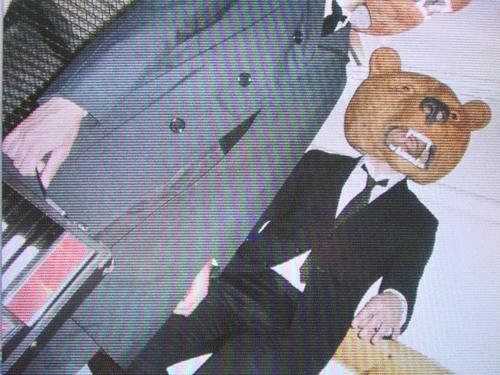
The Teddybears wear huge bear heads, but their identities are not a secret. You may remember Teddybear Joakim Ahlund from his other other band, Caesars. No? How about “Jerk It Out,” Caesars’ catchy-cool garage rocker that sounded like Franz Ferdinand doing Smash Mouth, heard on those flailing-silhouette iPod commercials last year? Yeah, I thought so.

That song was overexposed to the point of ubiquity; now, the Teddybears are reaping the benefits of that (literally) commercial success. Ahlund has reinvented Teddybears into a jumpy dance-pop outfit somewhere between DFA, Fatboy Slim and a semi-ironic Hollywood hipster party (like there’s any other kind). And since we hook-hungry consumers can’t get enough of scarily catchy tunes in adverts, their hand-clappy raga-charged single “Cobrastyle” has been making the rounds in spots for Tab Energy drink and, most effectively, a break-dancing Heineken ad worth finding on YouTube. (Note: “Cobrastyle” refers to guest vocalist Mad Cobra.)

The disc has plenty of sweaty dance tracks à la “Cobrastyle,” including “Throw Your Hands Up” (with dancehall hero Elephant Man on the mike), but keep your ears open for two particular standouts. “Yours to Keep” is a sunny, top-down anthem featuring the original Kelis (that would be Neneh Cherry) on vocals, with new school Swedish pop queen Annie cooing behind her. A close second is “Punkrocker,” featuring the king of them all, Iggy Pop, barking to the guitar-powered beat. So: While Soft Machine may not exactly be a work of substance, that’s pretty much the point. In short, don’t think — just dance.


THE TEDDYBEARS | Soft Machine | Big Beat/Atlantic

(Originally published in the LA Weekly, 9/06)

Favourite Sons, Sea Wolf at Spaceland, 9/18


The multinational coalition Favourite Sons trade in what the Waterboys’ Mike Scott would call “The Big Music,” a grand, anthemic sound that soars on emotion and muscular musicianship. Singer-songwriter Ken Griffin fronted ’90s Irish shoegazers Rollerskate Skinny, while his cohorts paid their dues in Philly psychedelics Aspera before crashing together in New York City during 2004. Rabid blogerati have already anointed them serious contenders for the Next Big Thing of 2006 for songs like the hard-charging “Hang on Girl,” eagerly spewing superlatives all over their debut, Down Beside Your Beauty, possibly the most genuinely earnest record ever released on the Vice label. Recalling Doves channeling Ocean Rain–era Echo & the Bunnymen fronted by a civilized Iggy Pop, their refined sincerity is a welcome relief. Promising L.A. atmospheric folkies Sea Wolf share the bill.

(Originally published in the LA Weekly, 9/06)

Thursday, September 07, 2006

EVERYBODY DO THE PIGEON!


*Underground L.A. rapper Pigeon John can’t help it — he’s weird*

Pigeon John looks almost nervous. But not for long. A slight guy dressed simply in jeans and a plaid button-down shirt, the longtime L.A. rapper steps to the microphone on a balmy summer night. The venue, Safari Sam’s, is a converted strip club, and it kind of shows: Red velvet lines the walls, and the remnant of a stripper pole stands in a darkened corner. The setting is oddly appropriate — the exotic dancers of yore replaced by a mob of aspiring microphone fiends on the maiden Scribble Jam Tour. From far and wide, rappers have descended on Sam’s with a vengeance, talking shop and slinging CDs in the parking lot between turns onstage before the all-out rap battle that concludes each event.

The crowd curiously eyes Pigeon John’s band — an unassuming bunch including a drummer, a guitarist/keyboardist and a DJ. But the curiosity turns to involvement; soon John’s self-effacing sense of humor and catchy, melodic tunes, mostly from his new Pigeon John and the Summertime Pool Party on Quannum, have pulled people in from the parking lot and closer to the stage. The draw is partly the stage electricity, partly the songs, with their deft juxtapositions of the funny and the poignant.

John’s not afraid to make light of hard times and bleak situations. “This one,” he explains cheerfully, “is about the time I woke up to find an eviction notice on my front door!” He tosses a curve ball: “This next one is for all of the gay brothers in the house. Put your hands up!” (He’s straight, recently married to his longtime girlfriend.) The audience just look at him, not sure if they should laugh, boo or throw something. He introduces “Do the Pigeon” as a new dance he made up that morning in the shower, then launches his body into a spastic whirlwind of clapping arms and bugged-out eyes, like the cartoon character Ren of Ren & Stimpy come to life — hip-hop in Technicolor. One vignette features a booming voice-over demanding he get off the stage. “What am I doing here?” he laments. “No one wants to hear from a 43-year-old rapper.” Everyone’s laughing now, including fellow L.A. underground rapper Busdriver and Beat Junkies DJ Rhettmatic. “That was good, but a little disturbing,” says one friend at set’s end. “He’s funny, but the songs are kind of... heavy.”

Told of my friend’s response, Pigeon John throws his head back and laughs. “I love that. Going back to my early days, the only way I really stood out and got people’s attention was to encompass my music in a happy vibe, even though there are deeper meanings to the songs,” he says, sitting on the front patio of downtown’s Standard Hotel, smoking a cigarette and sporting a tiny pin emblazoned with an image of Hank Williams. “I like contradictions. I love really happy songs that are terrifying. Simon and Garfunkel are great at it, and the Beach Boys are the best. I’m a big fan of movies as well, and Wes Anderson is phenomenal at doing that. On the surface, his films like The Royal Tenenbaums seem like comedy, but then there’s suicide, divorce and stuff. He finds a way to case it in a candy-coated shell. That’s the way I do rap music. The kind of hip-hop I’m most into is hardcore like early Mobb Deep. But when I try to make straight-ahead hardcore rap, it comes out totally different and kind of weird. It’s not really my purpose, but I just can’t help it,” he shrugs.


Contradiction comes fast and furious for this happily conflicted rapper. When he was a mixed-race kid in an all-white area of the Midwest, his mother was young, maybe too young, and dealing with demons of her own.

“I was born in Omaha, and then moved to L.A. in, like, kindergarten. There was a lot of moving,” he remembers. “My mom was only 23, and we never stayed in one place for too long. I was very used to having her wake my brother, sister and me up in the middle of the night; we’d lay a sheet down in the living room, throw all of our clothes in there, tie it up and go. We didn’t realize it was to skip rent and stuff like that.

“Being in Nebraska in the ’80s, there weren’t a lot of black people,” he sighs. “I had a couple of friends, but it was mostly an onslaught of the N word, very terrible things for a kid to deal with. When I moved to Inglewood, it was the total opposite. I was the sore thumb once again. But that’s when I really discovered music, particularly rap.”

Going from being the only black kid in Nebraska to the lightest in predominantly black Inglewood, young Pigeon John escaped to the same refuge so many other tortured souls seek out in desperate times: the radio. “All of that turmoil eventually had a lot of influence on my music, which was filtered through listening to the original KDAY as a child. They played UTFO, Run-DMC and the Beastie Boys, but they also played Madonna, Human League, Oingo Boingo — it was the bomb,” he smiles wistfully. “In that era, everything was mixed together. So when I started writing music, what came out sounded very ’80s. I can’t escape melodies and harmonies. I even get a little annoyed at myself, like, ‘Why can’t you just rap?’”

First getting on at L.A.’s legendary Good Life Café in the early ’90s, John busted his ass to find his own voice. “The first time I got onstage, I thought I was fresh,” he laughs, “and there was no reaction whatsoever. I went back every week for three years just to get people to pay attention, let alone be impressed.”

Now he’s toured across the country more times than he can count, releasing well-received independent albums (like the affecting emo-hop of Pigeon John Is Dating Your Sister) and creating an audience for his genuinely colorblind brand of boom-bap. He’s now signed with the influential heavyweight indie label Quannum, which will take his show to Europe and Australia after an American tour alongside Busdriver.

“It’s been a sloppy, slow process,” he muses with a grin. “But looking back, it all seems very natural.”

For his new album, John uses that lifetime of experience to create arguably his best work. The rugged “One for the Money” finds him holding his own on the microphone alongside the awesome Rhymesayers rapper Brother Ali (no small feat), but those insistent pop hooks are never far from the fore; Mr. Hansen would be happy to pen something as peppy as “Brand New Day,” while “Money Back Guarantee” taps a sample of the Pixies’ “Hey” to ignite the chorus.

“I listen to all music through a hip-hop mind; everything is loops. But I’ve always loved the Pixies and wanted to do something with that song. My hope,” John stresses, “is to go back to where there are no lines, where it’s just music. Someone like Beck is amazing at it. What he makes is just good music that everybody can enjoy. That’s my goal.”

(Originally published in the LA Weekly, September 2006)

Saturday, August 19, 2006

DANNY MASTERSON: HEATSEEKER


Yeah, he knows you know who he is. His friends know what you think about him. But they’re still having the best time ever. Spend a night on the town with one of Hollywood’s most conspicuous party people...

The night started innocently enough. It was a serene poolside scene at Hollywood’s legendary (and now notorious, thanks to Amanda Demme) Roosevelt Hotel, tonight playing host to a splashy Xbox party to celebrate the 2006 E3 Convention in Los Angeles, best described as a Winter Music Conference for tech-heads and extreme game enthusiasts. As leggy models dispense top-shelf liquor at a series of open bars, celebrities like Matthew Perry and Michael Vartan maintain their cool while being shamelessly gawked at by out-of-town video execs and pretty much everyone else. The shimmering pool is dramatically lit and surrounded by massive TV sets that are hooked up to game consoles for partygoers to easily experience the latest Xbox offerings. It’s not long before the area is teeming in a frothy crush of industry power players, recognizable working actors and enough inside chatter to keep gossip sites like Defamer.com on fire for weeks.

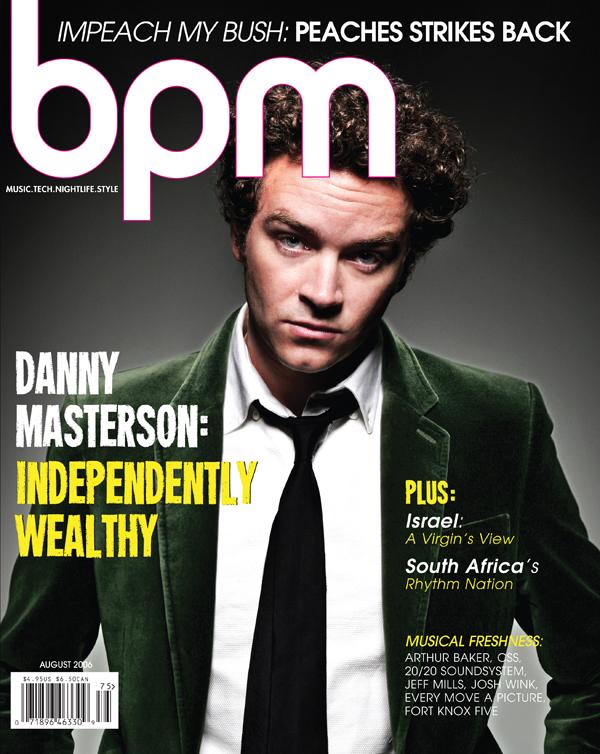
Controlling the sound in the eye of this celeb-reality storm is a particular working actor, tonight still using the stage moniker DJ Donkey Punch. Most under the age of 40 would easily recognize him as Danny Masterson, AKA TV bad boy “Hyde” from popular and omnipresent sitcom That ’70s Show. Having recently finished the series’ impressive eight season run on the Fox network, Masterson and friends are ready to have a good time. A full bottle of Patron is summoned from the bar, and he starts pouring drinks for his posse, which tonight includes his brother Chris, best friend Luke and girlfriend Bijou as in Phillips, the striking actress/tabloid fave best known for edgy cinematic fare like Black & White and Havoc. She throws her arms around Masterson’s neck. “I’m in a fashion show tomorrow night,” she purrs. “I’m walking for Cavalli. And yes, you have to be there.” He just smiles, surely thanking the gods for his good fortune.

Still, Masterson’s TV star status and relaxed demeanor doesn’t make him immune from the same problems most other DJs suffer at gigs, and tonight it’s all about the volume — or lack thereof. Because of the Roosevelt Hotel’s close proximity to old-school Hollywood neighborhoods full of people that work for a living, music spun by the pool after dark has to be kept well lower than Masterson or the partygoers would prefer.

Masterson soldiers on. Using a Sertato digital DJ system, he spins a tasteful blend of alterna-classics from the Smiths next to current favorites Bloc Party amidst more obscure choices, like atmospheric British band Electrelane. It’s a fun, lively mix that alleviates some of the tension that’s inevitable at such high-profile events.

“Yeah, this kind of sucks,” he laments at the restricted sound system that’s fighting a losing battle with the din of conversation rising from the crush of people packed around the pool, now hosting a troupe of scantily-clad beauties splashing through a choreographed interpretive dance. “So let’s just have our own party.” More Patron is poured, and Masterson cues up a particularly raucous tune from Nashville teen punks Be Your Own PET. “Let’s see what they make of this,” he laughs. An explosion of buzz saw guitars and punk girl shrieks pierce the air. A couple of hipster kids in striped tees and asymmetrical haircuts stop by the tables to give Masterson props. Soon he’s whipped up a gaggle of bodies shaking it in the DJ area. By the time I’ve met actor James DeBello (Detroit Rock City, Swimfan) and teased Bijou Phillips about the brilliant way she says the word “library” in Black & White, Masterson’s got a serious party going on, with Gnarls Barkley’s “Crazy” inspiring more dancers into the fray.

“I know what people think,” admits Masterson’s self-described “BFF” Luke, who also works behind the scenes on Ashton Kutcher’s MTV show Punk’d. “They see Danny spinning and automatically assume he’s just another ‘celebrity DJ,’ but it’s not like that. We started spinning as a team. That first summer we lived in record stores, collecting over 3,000 records. It was just about good songs, mostly classic hip-hop. We weren’t mixing or anything,” he admits. “But Danny took it further, and really learned how to beat-match and mix. I’d suggest a couple of songs that I thought would sound good together, and he could actually make it happen,” he smiles admiringly. “People are always shocked when they see him play. He just did a gig at Ice in Las Vegas and had the whole place rocking.”

“Hey, what are you doing later?” I look to see that Danny’s talking to me. “You should come to Cinespace with us. Pony Up is playing, and they’re awesome!”

WE’RE ON TWO WHEELS, BABY!
“I first started spinning with my boy Jimmy Boyle at the Three of Clubs. That’s when I began buying records, which was like eight or nine years ago,” Masterson remembers a couple of weeks later from the set of his latest acting gig, “heist movie gone wrong” comedy Capers. “DJ AM showed me how to mix the beats, and then Luke and I would go and do our friends’ parties. We’d play really fun hair-metal and random, weird ’80s hip-hop tracks. We’d mix in bad ’80s hits, like Foreigner and Phil Collins. It was hysterical. People didn’t know what was going on.”

It was a joke that turned quite serious when he started getting calls to play at brand-name clubs and parties. Soon, Masterson was a regular on the celebrity DJ circuit, spinning exclusive industry events from Los Angeles to New York. He’s understandably uncomfortable with the “celebrity DJ” tag, but is quick to remind that he does know what the hell he’s doing up there.

“Every once in a while I’ll train-wreck a transition, that’s for sure,” he confesses. “But I understand the role of a DJ. You have to keep the girlies dancing and make sure everyone’s having a good time. The best way to do that is to never have a break in the music, so I learned how to mix well enough to keep it smooth.

“We all started with jail terms, like DJ Tossed Salad and DJ Prison Bitch,” he says about his recently retired moniker DJ Donkey Punch. “When Puff Daddy became P Diddy, I changed mine up to DJ Donkey Pizzle. Now I’ve changed it again. Donkey Pizzle is officially retired, and my new name is DJ Mom Jeans. You heard it first!”

Masterson laughs at the absurdity of it all, but that’s exactly the point.

“Me being a DJ almost became too serious, and that’s the last thing I want. So having crazy names helps keep it fun,” he explains. “I do a lot of parties, and I want it to just be fun. My friends are real DJs, guys like AM, Mark Ronson and Stretch Armstrong. Those are all my boys. I’m just an actor that loves music. Back when I started, there weren’t so many good DJs that could mix all different styles of music. That’s what I wanted to do. Now you’ve got guys like Steve Aoki and DJ Vice that can really rock a party that way. Celebrity DJs are everywhere. Now, I wouldn’t even start DJing. But since I’ve been doing it for so long and it’s still fun, I don’t feel like I have to retire myself.”


RADIO ASYLUM
When Danny Masterson calls himself a DJ, it’s not just in the wheels of steel sense. He’s also one-half of the duo behind radio show “Feel My Heat,” which is broadcast on Los Angeles’ wildly popular FM station Indie 103.1-FM every Monday night. Best known for “Jonesy’s Jukebox,” the weekday lunchtime slot featuring Sex Pistols guitarist Steve Jones, Indie has become the local bastion of current new rock upstarts next to old-school alternative heroes. On “Feel My Heat,” Masterson and local promoter Brent Bolthouse play whatever they hell they feel like, bolstered with a healthy dose of “color commentary” from Danny. A recent episode boasted a panorama of music ranging from Cold War Kids to the Rakes to Blonde Redhead.

“Brent manages the band Camp Freddy, and he made a deal with Indie to get them on the station,” Masterson recalls of the show’s infancy. “While he was talking to (program director) Michael Steele, Brent jokingly asked for his own slot. Michael said sure. So when it came time for (Bolthouse) to do his first show, he asked me to stop by and hang out with him on the air. I went, and it was fun. For the second week, he asked me to come back and bring my own records to play. I played like five or six songs that next week, and started talking mad shit on the air, really funny stuff. After the third week he said he didn’t want to do the show without me. Brent’s got his style of music, and I’m out searching high and low for all types of hot new music, whatever’s awesome. With Brent, it’s more of a conversation and telling a story, while I just rip on everybody, including myself” he says with an evil giggle. “Nothing’s sacred.”

A highlight of “Feel My Heat” is the “Ode to Silverlake” segment, which is a musical middle finger directed towards the cooler-than-you hipsters that populate LA’s famously hyper-trendy Silverlake neighborhood.

“We were playing a Weezer song on one of the first shows, and this hipster kid from (Silverlake) calls up complaining, ‘you shouldn’t be playing fucking Weezer, man. That’s not indie.’ I couldn’t believe it. I was like, ‘Where do you think you got your haircut, your clothes and your whole style?’” Masterson seethes. “Weezer is like your godfather, you stupid motherfucker! So just to mess with him, we played something like “Come Sail Way” by Styx, and that turned into something we do on every show now. It’s directed at all of the hipsters that go to Star Shoes, Beauty Bar and Cinespace,” he adds, naming just a few of LA’s current hotspots. “We’ll play songs like White Lion’s ‘When The Childern Cry’ just for them. Last week we played ‘Pac-Man Fever’ by Buckner & Garcia.” The irony that these cheesy nuggets are being spun on the city’s premier outlet of what’s perennially fashionable is not lost on Materson. “We do it because we can,” he chuckles. “It’s all in good fun.”


PARTY ON
Wisely, I accept Masterson’s aforementioned offer to accompany him to the Pony Up gig at Cinespace. Leaving the now-sloppy last dirges of the Xbox party, Masterson, Bijou Phillips and Luke pile into a chauffeured SUV. Maneuvering through thick traffic up Hollywood Boulevard, it only takes a few minutes to arrive at the club, where people that you’ve surely seen populating the pages of Cobrasnake.com are milling out front when Masterson rolls to the door. Leaping up the red-carpeted stairs into Cinespace, those very same hipsters he likes to tease are clearly happy to see him. He gets an endless sea of pounds, smiles and “what’s up’s?” through the crammed dance-floor where a DJ is blasting Robert Palmer. By the time his crew gets to the main room, Pony Up has already started their set.

“They sound so much better than the last time I saw them,” Masterson explains of the Montreal band’s ear-ticklish blend of smart girl vocals and guitar-driven beatitudes before heading to the bar to buy the first round of drinks. When he gets back, fellow celeb DJ Steve Aoki is in tow, bouncing around with his usual surplus of energy. The Cobrasnake himself stops by and snaps a few photos. Masterson holds court on anything and everything. Topics range from his adoration of actor Sean Penn (“The greatest of our generation”) and Pearl Jam singer Eddie Vedder (“They’re the only two people out here that I have too much respect for to even meet,” he admits) to the uselessness of psychiatrists (“All they want to do is get you on drugs,” he muses).

“Hey man, I get it,” he says at the end of the night back in the SUV on his way home. “I got lucky, and on a sitcom at that. People can say what they want, but we were on for eight years. It was a successful show, and that’s the reason I can do what I do. Now that I’m here, I want to make more good things happen, have success in other places.” Given his investments in popular LA restaurant Dolce to the immense buzz around his jazz night Kid’s Cotton Club at Hollywood spot Guy’s (“I want to recreate the original jazz joints of Harlem”), it’s apparent that he’s doing more than simply supplying tabloids with fresh fodder. “We’re not just dumb kids anymore.”

Thursday, August 17, 2006

GIRLTALK: RIPPIN' & DIPPIN'


Move over, mashups! Now there’s somethin’ meatier: DJ Girl Talk’s Night Ripper

In 2006, everyone’s a DJ — even you! — thanks to MP3s and the iTunes playlist function. But nobody celebrates sonic egalitarianism, or takes it to such frantic extremes, as does DJ Girl Talk (a.k.a. Pittsburgh DJ Greg Gillis), whose highly actionable new mashup CD Night Ripper (Illegal Art) is all the rage on the underground.

Bordering on a new-school Paul’s Boutique for the pop-culture-obsessed ADHD set, Night Ripper salutes as much of the past 30 years of contemporary music as possible in as short a time span as possible. Where most mashups simply juxtapose a few tracks with similar BPMs or chord progressions, Girl Talk piles a decadent number of songs on top of each other to create a manic variation on Name That Tune — or a digital twist on ’80s mixmasters Stars On 45.

A routine like “Bounce That” finds the Purple Ribbon All-Stars rapping over a perpetually morphing series of beats from the Emotions, LCD Soundsystem, the Breeders, Laura Branigan and Britney Spears (just to name a few) in just two minutes. “Hold Up” features James Taylor crooning over a Mariah Carey loop before the Pixies’ “Where Is My Mind” sets the stage for Nas to rock the mic before pitting Weezer against a Chicago ghetto-tech rhythm. In all, there are more than 150 samples (each credited in the liner notes) that fuel the party-hearty dance mix.

Incredibly, this potential litigation orgy is not something you have to hunt down, but can be easily purchased at regular retailers like Amazon. Of course, the blogoheads are hot and bothered over Girl Talk: Some hail him as the new DJ messiah, while others consider him no better than musical fast food. With a live show notorious for “seminudity” and audience participation, the buzz should be deafening by the time he sets a date here in Los Angeles. But now that everyone from MTV to The New Yorker is onto him, he knows the clock is ticking. As he put it on his MySpace page recently, “I’m now a hyped band — get ready to hate me in approximately one year.” In his case, make that six months.

(Originally published in the LA Weekly, August 2006)

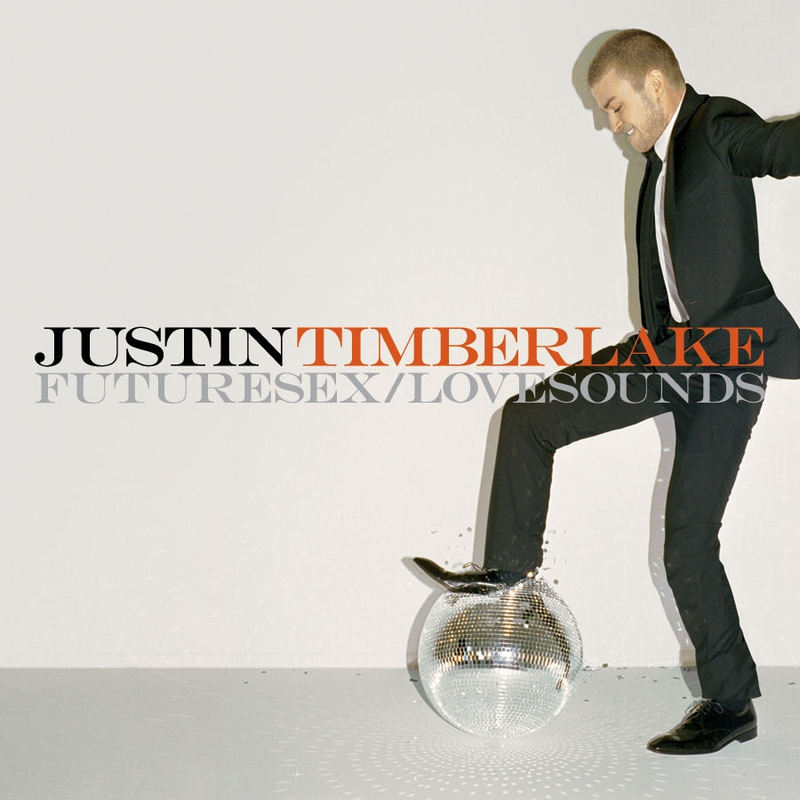
Justin Timberlake Live @ House of Blues Sunset, 8/11


Measured by the celebrities in attendance at this crazy exclusive club date, Justin Timberlake is one of pop’s brightest lights — Ellen DeGeneres, the Hilton sisters, Tyra Banks and Pharrell Williams were some of the fan favorites eliciting shrieks from below whenever they peered over the VIP balcony. But once the former ’N Sync-er took the stage, it became obvious why everyone was there.

Lifting off with a bombastic version of his revenge fantasy “Cry Me a River” (take that, Britney!), Timberlake then led his tight all-black band through an exuberant take on the rollicking juke-joint number “Señorita,” with the capacity crowd singing louder than Timberlake himself. But the new songs were the true test, and for the most part they passed. “My Love” (which got a five-star review from Pitchfork’s terminal hipsters) is another top-flight Timbaland collaboration, riding an easy Southern hip-hop groove and falsetto melody. Will.I.Am showed up to guest on his collabo “Damn Girl,” an upbeat pop romp screaming for radio play. The lilting ballad “Until the End of Time” showcased Timberlake’s knack for sticky melodies and sugary sentiment. “Like I Love You” became a live mashup, slipping the riff to Nirvana’s “Smells Like Teen Spirit” underneath the chorus. The party ramped up when Timbaland and the Three 6 Mafia busted onstage; even the band seemed bemused by Timberlake’s delight at performing alongside such hip-hop heavyweights. And the rousing closer, the ambitiously bizarre new single “SexyBack,” drew the loudest ovation of the night from the partisan crowd. If Timberlake’s upcoming FutureSex/LoveSounds shows this kind of breadth and bump, it could be the hottest pop album since, well, Justified.

Timberlake has carved an enviable niche in the pop-cultural landscape, with a pansexual identity that excites both gay boys and the decidedly female TRL massive. Musically, he enjoys a credibility that’s as much about his own undeniable talents as about the company he keeps. It’s like Prince and Madonna really did have a baby in the ’80s.

(Originally published in the LA Weekly, August 2006)

Thursday, August 10, 2006

JUSTIN TIMBERLAKE @ HOUSE OF BLUES SUNSET, 8/11 (Preview)


Who’s laughing now? While the teen pop bubble may have burst, ’NSync refugee Justin Timberlake fashioned a golden parachute from the fabric of music’s most pervasive beat bosses, specifically the Neptunes and Timbaland. His resulting solo debut, Justified (Jive) exploded with hooks and hits, effectively catapulting him from teeny-bop pretty boy to number one contender for the king of pop crown (Usher? Puh-leeze!). Now he’s ready to take his next shot at the top spot with the forthcoming Futuresex/Lovesounds (Jive), led by the four-on-the-floor robo-funk of freaky first single “Sexyback,” an ambitious blast of club flash that bumps like something by idiosyncratic Chicago house pioneer Green Velvet (get thee to Wikipedia!), courtesy of ’06 production MVP Timbaland. Dress to sweat — there won’t be a dry body in the house.
(Originally published in the LA Weekly, August ’06)

Wednesday, July 26, 2006

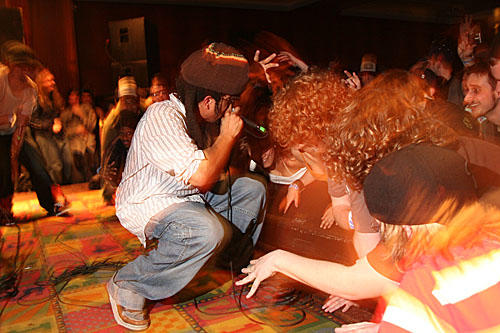
MR LIF w/CAGE @ KNITTING FACTORY, LA (Preview)


Two of indie hip-hop’s most compelling characters team up Wonder Twins style to activate this dynamic double-bill. Boston’s Mr. Lif is cruising in on the back of his fully realized new release, Mo’ Mega (Def Jux), which tempers his trademark high-minded microphone mediations with some of his most personal ruminations to date. Updating the Public Enemy manifesto of self-empowerment through boombastic beats, Lif’s lyrical dexterity is truly a wonder to behold. Def Jux labelmate Cage comes to the table with an unbelievably brutal back-story that powers tough-talking bomb tracks. From stories of childhood abuse to his own twisted tales of drugs, drama and violence, Hell’s Winter, the latest release from this self-described “recovering mental patient” is the sonic equivalent of a particularly heinous Harvey Keitel film as sound-tracked by El-P. Get ready to rumble, y’all.

(originally posted in the LA Weekly, July 2006. The pic of Mr. Lif ripping it up live is from his Myspace page. Word.)

Tuesday, July 11, 2006

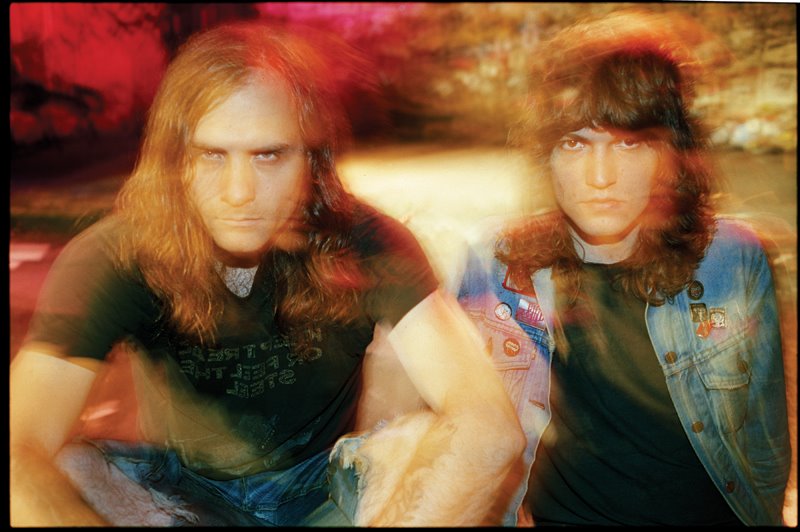
EARLY MAN at the Whiskey, LA (Preview)


If you want blood, classic Midwest metal-heads Early Man bring it by the bucketful. This Ohio-bred duo of Mike Conte (vocals, guitars) and Adam Bennati (drums) invoke a gleefully evil heavy metal thunder that recalls the glory years of Iron Maiden, Mercyful Fate and Metallica when they still mattered. Sharpening their battleaxes in New York City, Early Man landed on major indie label Matador, releasing a self-titled EP and the skull-crushing full-length, Closing In (both feature their signature song, stoner feel-good anthem “Death is The Answer”). EM’s unpretentious, denim and concert t-shirt-clad rawk is a demolition derby of blistering riffs and Conte’s maniacal, young Ozzy howl. Fleshing out the live show with a bassist and second guitarist, EM is sure to do major damage in the intimate confines of the Whiskey. Wolf who?

(Originally published in the LA Weekly, July 2006)

Saturday, July 01, 2006

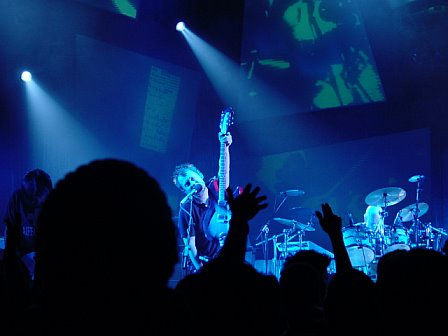
RADIOHEAD @ The Greek, Los Angeles, June 29, 2006 Pt. 1


Section A, Row K seat 46. Two rows behind Slash, three seats to the right of Steven Bauer. Oh, starry night. The Big Dipper looms overhead...

The band sounds phenomenal. The new songs are strikingly brilliant: "Videotape," "All I Need," "Arpeggi" (which comes with a rapid-fire sub-rhythm somewhere between Aphex Twin and Timbaland), and stunner "Bangers and Mash," featuring our hero Thom Yorke on a drum kit which he summarily destroys by set's end. All welcome additions to the Radiohead canon. "Idiotique" rages with the energy of Underworld's entire catalog, which Yorke's conducts like his own private rave. "Everything in its Right Place" stands as one of their most timeless monuments, truly classic rock, no less evocative than "Baba O'Reilley." Yorke playfully chastises a fan for requesting "Creep," later muttering "'Creep' my ass," during the encore towards the persistent request maker, instead launching into the soulful new ballad "House of Cards." When they revisit "Pablo Honey," the hordes go customarily berserk. Flashbulbs pepper the crowd during a particularly grand performance of "Paranoid Android." They swagger and sway, jerk, sputter and flail. Radiohead have tapped into a particularly 21st century kind of anxiety, and in the process come to define more than just a moment in time. New iconic giants are go.

Saturday, June 24, 2006

HAVE FUN, FUCK SHIT UP


Youth is not wasted on teen punks Be Your Own Pet
By SCOTT T. STERLING

Wednesday, June 21, 2006 - 3:01 pm


The No. 1 enemy to any teenager in the world is boredom. Kids will do anything to avoid the B word, from wanton sex to trading prescription pharmaceuticals to forming a rock band (for the luckier parents out there). And despite what Chuck Klosterman may say in the June issue of Esquire, teenagers are alive and well in 2006. Exhibit A: new teen-punk heroes Be Your Own Pet, who are the polar opposite of boring.

These bona fide adolescents (all under 20), who formed BYOP at the progressive Nashville School of the Arts in 2002, seek to incite a white-hot riot of teen fury, their songs rushing by in a cacophonous flash (many clock in at 90 seconds), with the band — Nathan Vasquez (bass, afro), Jonas Stein (guitar) and Jamin Orrall (drums) — playing so fast they seem to race each other to the next tune (think Bad Brains beating the crap out of the Ramones). Much like the Yeah Yeah Yeahs, to whom they’re most often compared, deep inside these seething whippets of nervy energy lies a real sense of tunefulness and song craft that belies their age, and apparent ADD. The band’s writing skills shine brightest on “October, First Account,” which could very easily play as BYOP’s “Maps” (to really beat the YYY comparison to death). Somewhere between Cat Power gone electric and the Blake Babies’ younger siblings, BYOP even have the audacity (and capability) to toss a disco-reggae break into the song like some sort of mutant Blondie 2.0 without breaking a sweat. In case you haven’t been paying attention, this lot can really play, which is not something one can say about many of their teen-punk contemporaries.

They’re also fronted by this year’s most reluctant indie sex symbol, Jemina Pearl, whose almost embarrassingly fine profile is an obvious point of contention (at one point in our interview she mentions the proliferation of “creepy older guys” at their shows). You’ll be hard pressed to find a photo of the band where she’s even looking up, unless you count their conspicuous presence on the latest cover of trendy fashion monthly Nylon.

“Yeah, we’re on the cover of that magazine,” Pearl deadpans about the splashy spread. “It’s cool, I don’t know. They dressed us up in all of these stupid-looking clothes. I look ridiculous, I think. All of us do, really. It doesn’t even look like us. Whatever.”

They’ve already got the U.K. eating out of their hands: When the band took the stage at a massive U.K. festival last summer and nerves forced Pearl to vomit into a towel, fans begged for it (ew). She obliged by throwing it into the crowd, watching incredulously as they fought over its rancid contents (double ew). They also melted what seemed like a million hearts at this year’s SXSW fest — the hysteria mostly generated from their MySpace page, which had only been set up six weeks prior. In sum, BYOP — who cribbed their moniker from a song by Infinity Cat band Art Circus — have quickly become a pop phenomenon of genuine note.

When I track down Pearl and the rest of the band, it’s over the phone from Detroit, on the much-heralded 6/6/06 — the same day their eponymous debut album on Thurston Moore’s Ecstatic Peace! imprint hit American streets. Pearl is polite, but a young woman of few words. Or maybe I’m just boring.

“It’s no big deal,” she replies when asked if she’s seen the album on record-store shelves yet. “We were just down in Columbus, and a couple of stores had it out already. It was more exciting when it first came out in the U.K.,” she says nonchalantly — “but yeah, I’m excited that it’s out in America now too. It’s pretty cool.”

A far cry from the in-your-face exhibitionist that screams dogmatic teen slogans all over BYOP’s recordings (e.g., “I’m an independent motherfucker/And I’m here to take your money/I’m wicked rad/And I’m here to steal away your virginity” — “Bunk Trunk Skunk”) and whips audiences to hysteria at their notoriously short live shows. But she knows better. The members of BYOP were born into musical legacies. Pearl started singing in a church choir; her father is musician/artist Jimmy Abegg, while drummer Jamin’s father is noted songwriter Robert Ellis Orrall. These youngsters are wise in the ways of the industry, even one that’s heaped such hype on them it would be easy to crack (from profiles in Rolling Stone to a gushing review on Pitchfork).

Asked about her switch from the hymns to devil’s music, Pearl sneers, “Well, I’m not a Christian and don’t go to church, so it wouldn’t make sense for me to sing in a choir.” She adds, endearingly, “You don’t have to actually be good at singing to be in a rock band, you know?” But she can sing: Pearl’s clear vibrato and melodic fluency evoke a more operatic Debbie Harry.

“I love this band,” raves L.A. hipster guru Steve Aoki, an early BYOP fan. “Even at Coachella (this year), they only played a 15-minute set, sprayed shaving cream all over the place and jumped in the crowd. And it was just over. Awesome!”

“People don’t know us as well as they do overseas, so the shows aren’t, like, insane crazy,” Pearl surmises of their current American trek. “But having to win people over is part of the fun. We’re having a good time, and that’s all that really matters.”

You could say the medium is the message for these kids. Asked about the band’s manifesto, Pearl admits, “We’re not trying to put too much across. We’re just happy to be in a band, trying to have fun with it.” In other words, as young as BYOP may be, they’re aware of just how brilliant, beautiful and brief that time can be, and have chosen to honor it with loud, fast and vicious teen anthems. Sure beats the hell out of high school.

“We’ve gotten so many opportunities. So many bands don’t get the chance [to make records], which is unfortunate. But we’ve gotten that chance, so we’re trying to enjoy it.” She pauses, then adds, “Mostly, we’re just trying to find a way to buy beer.”

(Originally published in the LA Weekly, June 2006)

Monday, June 19, 2006

YOUNG / GIFTED / BEAUTIFUL / BLACK


L.A.’s Murs just wants to be your favorite rapper. Is that so wrong?
BY SCOTT T. STERLING


First things first: Murs is better than your favorite rapper, and he knows it. While the glory continues to fall on overamplified rap clichés like The Game (whose microphone I’d just bet goes to 11), Murs is L.A.’s truest representative in America’s hip-hop congress. Blessed with a husky, authoritative flow, he’s still a couple years shy of 30, but his conversational raps bleed with a wry wisdom well beyond his years. (“. . . You say I’m backpack ’cause I don’t have a gat/Man, I just love life and I’m dealing with the facts/I’m young, I’m gifted, I’m beautiful, I’m black.”)

Second: Murs has much cooler shoes than you or your favorite rapper. On a sun-soaked afternoon outside Sky’s Tacos on Pico — in the heart of Murs’ beloved Mid-City streets — he’s sporting an extra-fresh pair of U.K. import Adidas kicks emblazoned with graphics from the ’80s sci-fi classic Tron. His hair explodes in a mass of thick dreadlocks, and it’s a rare moment when he’s not wearing an ear-to-ear grin. Murs is a genuine L.A. native who can reference Venice skate legends like Jay Adams as quickly as he’ll mention old-school rap heroes Mystic Journeymen. He first discovered hip-hop on KDAY AM — “I knew I wanted to rap [from the time] I bought the Fat Boys’ Crushin’ on cassette in 1987” — and his immense hometown pride is never far from the surface.

“When I was growing up smoking weed back in ’90, ’91, people called me ‘white boy’ and ‘stoner,’” he laughs, recalling his early years in Mid-City, an area roughly bordered by avenues Western, Fairfax, Olympic and Jefferson. “But after Dr. Dre’s album The Chronic came out, those same people started buying weed from me. But I’ve always been like that. I try to be cool with everybody. I’m not one of these rappers that need all of the attention. I grew up with a great mom that showed me love. I don’t need a diamond chain to feel special.”

Sipping on sweet lemonade and picking at a shrimp burrito, he’s contemplative about how much — and how little — hip-hop has changed in the 15 years since then.

“Platinum rappers aren’t talking about anything anymore. I was listening to Ice Cube’s Death Certificate album the other day, and there’s all kind of knowledge on there for the people. Jay-Z might say something on one bar in one song. That’s not enough,” he stresses. “That’s why my next album is going to be message driven. All black kids are hearing on the radio is to go get a car, get some rims and a gun. That’s not good.”

Originally coming to prominence as part of L.A.’s Living Legends rap crew, Murs saw his profile rise upon the release of 2004’s Murs 3:16: The 9th Edition (Definitive Jux). Bucking the trend of working with numerous producers, Murs made 3:16 alone with DJ 9th Wonder (of North Carolina collective Little Brother), who was already respected in the hip-hop underground for his use of deep-rooted classic soul tracks.

The pair is back at it with ’06’s Murray’s Revenge (Record Collection), thick with superior hip-hop narratives that find common ground between Ice Cube and El-P. 9th Wonder is still mining rare R&B (including ’70s lover man William Bell) to produce tunes that thump with a timelessness rare in current rap — something closer in feel to ’60s Motown. Murs sounds as relaxed talking about a day at the barbershop as he does riffing on female race issues, which he does eloquently on “Dark Skinned White Girls.” (“Now she likes the Smiths, the Cure/Really into Morrissey/Heavy on the rock never fooled with the Jodeci . . ./Rejected by the black not accepted by the white world/And this is dedicated to them dark-skinned white girls.”)

But with all of the accolades, he still feels like something’s missing. “I don’t have Murs fans,” he says matter-of-factly. “I have a lot of Atmosphere, Aesop Rock and Sage Francis fans that also like what I do. I’m respected, but it’s not like I’m their main guy. I’m not cool with that anymore.”

He’s keenly aware of the role race plays in hip-hop, as in life, but doesn’t sweat the irony of his place in a predominantly white indie scene.

“People like to get into that,” he says grimly. “Maybe you should ask Beck what it’s like to play to mostly white audiences while naming his album after Cholo slang,” he jokes, referencing Mr. Hanson’s Guero. “I just want to reach as many people as possible. I really do just want to be your favorite rapper!

“I don’t want to toot my own horn, but I’m really good at performing,” he says, shrugging. “Mr. Lif might have a tighter technical show, but if the sound goes out, I can still rock the party. I can talk to the crowd and make them laugh. Nobody in rap is doing that, including people I admire, like Brother Ali.”

Still raw from a “shitty” tour in support of Murray’s Revenge that he cancelled in the middle (“I just lost interest,” he says), Murs is adamant that he’s hit a glass ceiling in the indie rap underground. And he’s prepared to drastically change his game to transcend the indie niche.

“People have always told me that the best way to sell records is to tour, which is a lie. Record companies don’t want to hear it, and a lot of people disagree with me, but until you hit the right market, you could tour until you’re blue in the face and it won’t make a difference.

“[Now] I’ll do Coachella and Rock the Bells, places where I can make some new fans. If I can win over a tent of 3,000 white people at Coachella, imagine what I could do in front of that many black people. I want to be respected as the best rapper in Los Angeles, period. Still, I’ll always be that strange kid with the weird hair that I was when I was 14 years old and riding Roller Blades past the crack spot.”

Murs isn’t just talking yang. He now shares management with the likes of Snoop Dogg and Tyrese Gibson, and gets props from L.A. power movers like Cypress Hill’s B-Real. To further prove his point, Murs is already working on the follow-up to the self-produced movie Walk Like a Man, a gritty drama about a young rapper trying to break into the rap game. He’s also planning his next album — which he terms “my definitive statement.” And he’s not concerned with indie cred now, if he ever was: “I want to do a song with Kid Rock [on my next album] so bad. He’s one of my favorite artists.” But Murs reserves his highest praise for perhaps the least likely of L.A. brethren. “I really want to work with [Black Eyed Peas leader] Will.i.am more than anybody,” he gushes. “He’s one of my idols. No one believes me, but that’s the realest dude in hip-hop. He grew up in the projects, and he’s still wearing the same thrift-store clothes that we was wearing back in 1991, freestyling outside of David Faustino’s club. He’s been L.A. hip-hop forever.

“I’ve seen him do so much, and I’m so proud of him,” Murs says warmly. “It’s because of artists like him that I can never give up.”

If that’s not California Love, nothing is.

(Originally posted in the LA Weekly, June 2006)

Monday, June 12, 2006

Pigeon John Live at The Terrace Club, Pasadena (Preview)


Surprise! Pigeon John uses hip-hop to charm and disarm with a classic style and miles of savior faire, infusing his black everyman lyricism with a particular potency and power. His forthcoming album Pigeon John and The Summertime Pool Party (Quannum) is loaded with confessional couplets that connect through brutal honesty: “I used to have a white girl/Now I got a white wife/Kinda gettin’ used to hearing, ‘brother, that ain’t right.’” Paired with poppy upbeats and whimsical melodies, PJ’s light-hearted look at harsh realities is akin to fellow LA rap iconoclasts the Pharcyde at their freshest. With sly samples like the Pixies’ alterna-classic “Hey” driving the nice guy anthem “Money Back Guarantee,” even indie bed-heads can wave their hands in the air like they just don’t care. Now doesn’t that feel nice?
(originally published in the LA Weekly, June 2006)

THE STREETS, ACTUALLY


The U.K.’s notorious grime boy on his tour mate Lady Sov, doing crack with a pop star, and his cocky new LP

BY SCOTT T. STERLING

“Memories of Los Angeles? Um, let me think . . . ”

It takes Mike Skinner, the mastermind behind U.K. hip-hop act The Streets, a few beats to recall his own personal L.A. story. “It’s all pretty hazy, really. We did a really long press day once after being up all night, and I was able to do most of the interviews floating in the hotel pool. I really like the weather, but the people are a bit hard to work out sometimes.”

Yes, Skinner, wordsmith extraordinaire and the man who single-handedly elevated British hip-hop from punch-line status, is trading in easy clichés today. Which gives us license to trawl in a few of our own, like the one that says Brits can’t rap. Historically lousy with affected New York accents (and attitudes) — and lyrics about drive-bys and other subjects of which Brits know little, U.K. hip-hop has perpetually wallowed in a murky mire. That is, until the advent of Skinner’s band The Streets, which finally had the common sense to subscribe to hip-hop’s golden rule: Go with what you know. On his 2002 debut album Original Pirate Material (Vice), Skinner rapped in a thick cockney accent about what really happens during “the day in the life of a geezer,” which includes lots of weed and PlayStation and getting dissed by girls down the pub. His Ecstasy-enhanced emotions and chopped-sample beats appealed to indie kids and post-ravers equally, and the album was nominated for the vaunted Mercury Music Prize that year. With such a conspicuous launch, Skinner surged to become a bona fide pop star in his home country, while maintaining a respectable career stateside with ’04’s ambitious concept album A Grand Don’t Come For Free. All the while, Skinner maintained credibility in the underground, shining early light on new artists like Kano, who sprang from the so-called grime scene that gave Skinner his first break.

But it’s his star status in the U.K. that fuels the almost painfully confessional third Streets opus, The Hardest Way to Make an Easy Living (Vice), where he describes in detail the benefits and pitfalls of public acclaim. As he shifts through a myriad of bombastic hip-hop beats (and the occasional emo ballad), Skinner proves that beyond lyrics, his ear for sticky pop melodies is what gives his songs their strength.

“The album’s about living the dream, and the dream comes from my childhood,” he says, describing the record’s blunt emotional honesty — and the pastel-colored lens through which it’s filtered. Living the dream includes looking the part: His new image is pure Crockett & Tubbs; he admits, “When I was a kid, I watched Miami Vice and had posters of Ferraris on my wall.” And that Rolls-Royce featured on the album cover? That’s his, too. “Being a pop star is better than winning the lottery, because you get more respected,” Skinner theorizes. “Plus you can get away with a lot more.”

In his case, he’s gotten away with everything from a financially debilitating gambling habit to copious drug consumption. First single “When You Wasn’t Famous” describes an evening he spent smoking crack and having sex with an unnamed British pop star, then watching her ply her milk-fed image the next day on U.K. kiddie music show CD:UK. British tabloids have had a field day with the song, with claims that it’s about either former S Club 7 singer Rachel Stevens or Cheryl Tweedy, vocalist for equally sugary pop group Girls Aloud.

“I will say that the person that the tune is about didn’t mind it at all,” is his only comment on the subject. In the same song, he laments the advent of camera phones, since they hinder his ability to “do a line in front of complete strangers."

“I’ve chilled out considerably on that stuff this time out,” he admits. “It’s harder touring without it in some ways, but it’s also easier, since there’s a lot less of that roller-coaster effect mentally. Things are a lot more stable.” When asked to name his current drug of choice, he replies without a moment’s hesitation: “Caffeine.”

Skinner’s also taken a softer approach to women these days, despite the acidic “War of the Sexes,” which was inspired by Neil Strauss’ notorious tome on “scoring,” The Game. “Leo, one of the guys in my band, swears by the Chris Rock idea that men are only as faithful as their opportunities. Guys are flawed in that way. The book went around the tour bus really quickly. I’d love to meet Neil, actually. Think you could hook that up?” he adds with a wry giggle.

Currently on tour with much-hyped Brit-rapper Lady Sovereign, Skinner’s unfazed by her status, instead playing the role of wise older brother to the young up-and-comer.

“She’s more about America right now, which I think is the key to her potential success,” Skinner muses. “It’s all about her breaking stateside. And as much as I like America, I’ve never based my situation on making it there. It’s most important that my music speaks to British youth,” he says. And it does: British kids still hold him in high regard, even as he rises far beyond his working-class origins. “Those are my people, man!”

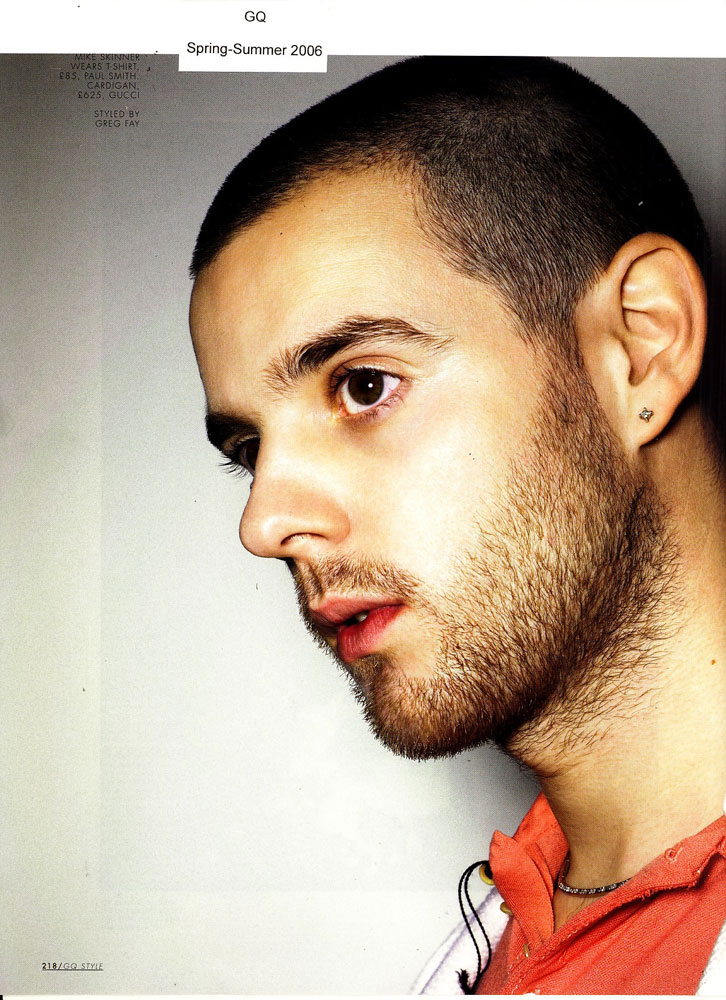
(Originally published in the LA Weekly, June 2006. The photo was hijacked from British GQ - Cheers!)

Monday, May 15, 2006

2005 FLASHBACK: Felt 2: A Tribute to Lisa Bonet


Hip-hop’s Employees of the Year earn their plaque with this powerful collaboration

(Rhymesayers) Back in the glory days of Marvel comics, the minds behind such legendary heroes as the X-Men and Luke Cage Hero For Hire came up with a quirky new concept: “What if?”

The idea was to let their writers and artists take on such hypothetical questions as “What if Spiderman joined the Fantastic Four?” and “What if the Incredible Hulk had David Banner’s brain?” In the equally obsessed-over world of indie hip-hop, the question “What if Slug, Murs and Ant made a record together?” has been answered with one of the best albums of boom-bap to mark 2005.

It’s common knowledge that Minneapolis’ Slug and LA’s Murs are among the hardest working dudes in hip-hop, always on the grind and practically living on the road. With Felt 2: A Tribute to Lisa Bonet (word to Denise Huxtable), it sounds like they went head to head, pushing one another to step it up and craft sharper rhymes. The results find them firing off a litany of lines back and forth like the Crocket and Tubbs of backpack rap. And yes, Murs is still better than your favorite rapper.

As the dynamic duo are spitting their girl-crazy game (they claim the project is all about “the long-term goal of having sex with b-level Hollywood actresses”), Minneapolis production wunderkind Ant steals the show with a dazzling array of street beats that thump with the ferocity of classic Boogie Down Productions laced with the soulful sheen of ’70s R&B. Veering from orchestrated Minneapolis funk interludes (“Reintroduction,” “Lisa”) to rich, dramatic strings worthy of the Love Unlimited Orchestra (“Your Mans and Them”) to even showing Kanye a thing or three about sped-up soul samples (“Dirty Girl”), this sonic tour de force effectively proves that Ant is among hip-hop’s production elite.

Packed with all sorts of inside jokes and jabs at the insular world of indie rap, Felt 2: A Tribute to Lisa Bonet even has a hilarious accompanying comic book, “True Tales of Underground Hip-Hop).” With new albums from both Atmosphere and Murs in the near future, 2005 is shaping up to be the year we might answer the question “What if Slug, Murs and Ant took over the world?”

(Originally published in Urb, Sept 05)

Tuesday, May 02, 2006

AUTOLUX: THREE THE HARD WAY


They’ve survived everything from also-ran bands to a shattered elbow to become one of the biggest (and most name-checked) bands in Los Angeles...


LA’s intimate (and by intimate, I mean about the size of the rec room in your parents’ basement) Silverlake Lounge is bursting at its’ tattered edges. There are hipsters of countless persuasions jockeying for position around the tiny makeshift stage at the end of the bar. It gets so thick that actor Giovanni Ribisi (tonight hanging with fellow thespian Tim Roth) gets busted by a bartender for hopping atop the bar in hopes of a better view in the cramped space.

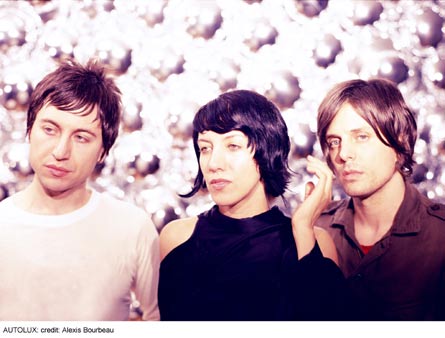
On the stage, clumps of red Christmas lights hang precariously from the rafters, while behind the drum set glows an oversized origami star. When the house lights dim and three slight figures take the stage, the boisterous crowd grows hushed in anticipation. A warped wash of spacey guitars loop into a hypnotic blur, which eventually explodes in a rush of sound somewhere between mid-period Sonic Youth, My Bloody Valentine’s Loveless and 3am on the best college radio station ever. The Christmas lights twinkle in time with the music as the trio – bassist/ethereal voice Eugene Goresther, guitarist Greg Edwards and drummer Carla Azar – set about proving exactly why they’re one of the most hotly tipped bands in LA, fresh from a stint opening for Nine Inch Nails on their 2005-06 tour.

I meet up with the band a few weeks after the Silverlake Lounge show in Goreshter’s nearby loft apartment, where I find them frazzled at the tail end of a day spent entertaining a steady stream of journalists. They exude a collective cool most likely gleaned from each member having been on the verge of breakout status with previous outfits (Edwards in Failure, Goreshter in Maids of Gravity and Azur in Ednaswap, best known as the band that originally wrote and recorded “Torn,” the song infamously covered into a worldwide hit for former Aussie soap star/current make-up shill Natalie Imbruglia).

Autolux’s debut album Future/Perfect (DMZ/Sony), has already garnered reams of praise, and one spin bears out the accolades. A lyrically androgynous swirl of guitar melodies and Azur’s massive drum style (think a cross between John Bonham and Mo Tucker), theirs is a sound that’s completely unique, yet comfortably familiar. The legendary T-Bone Burnett (who co-owns the DMZ label with filmmaking siblings the Cohen Brothers) produced the album.

“T-Bone just created a relaxed environment so we could make the album we wanted,” recalls Goreshter. “He didn’t mess with the songs at all. The best way I can sum up the experience is by talking about ‘the buzz.’” The band all exchange knowing glances. “When we first got to the studio, there was this awful buzz that just wouldn’t go away, no matter what the engineers did. From the moment T-Bone walked into the studio, the buzzing stopped and never came back.”

The band is especially appreciative of their lofty position due to a freak accident that nearly cost Azur the ability to play drums. After opening for Elvis Costello at LA’s Kodak Theater, she was crouched at the edge of the stage talking to friends when the worst happened.

“The stage lights went down for Elvis to start his show, and I didn’t realize my feet were tangled in cables. When I stood up, I tripped and fell from the stage onto the concrete floor ten feet below. I landed directly on my elbow.” Her elbow shattered, requiring nine metal pins and lengthy physical rehab to repair. She produces a wince-inducing x-ray. According to her band mates, she’s playing better than ever.

“She’s got something to prove,” laughs Edwards. “I was afraid she’d never be able to play again.” Azure gives him a pissed-off look.

“You never told me that,” she retorts. “Way to be supportive.”

As Goreshter jumps into to diffuse the situation, I take the internal tensions as my cue to hit the door. It sounds like the band is already working on the second album…


(Originally published in the Oct 04 issue of Urb Magazine).

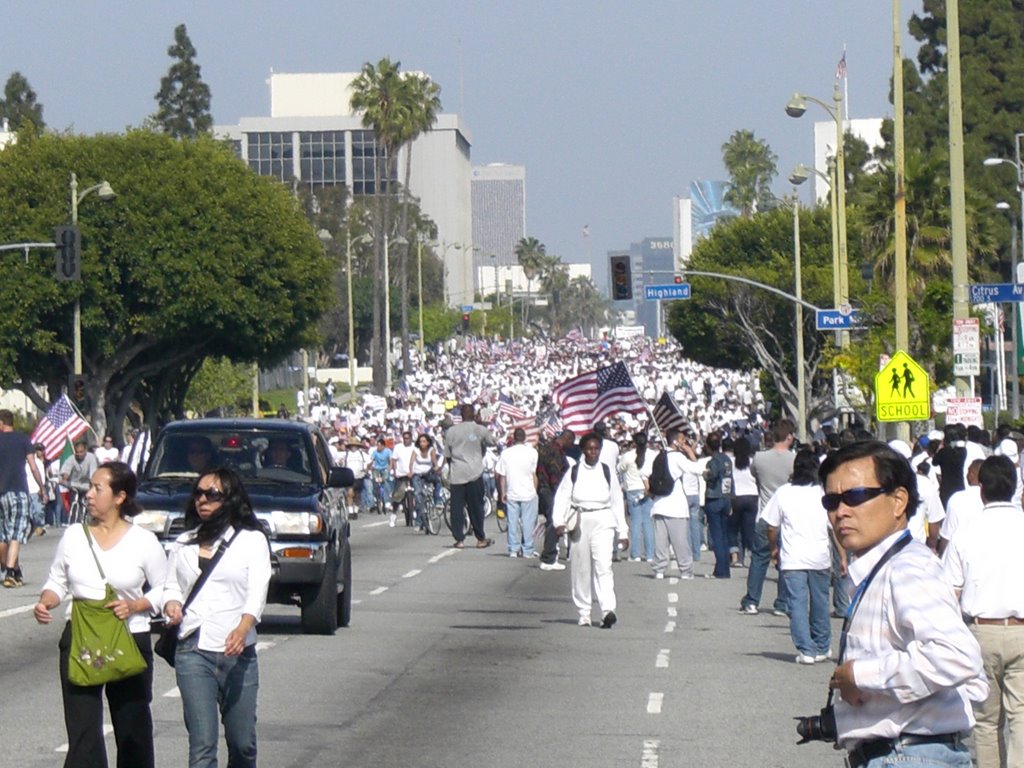
LA MAY DAY 2006


Yesterday a good half-million people marched up Wilshire Blvd (and a mere three blocks from HQ) in protest of proposed immigration laws. This is what it looked like when they appeared on the horizon...

Wednesday, April 05, 2006

2005 FLASHBACK: ANNIE


It was only a year ago that this sassy Norwegian pop princess piped up with her fantastic album Anniemal.

I instantly fell in love with her sunny mix of classic Madonna hooks, indie sensibilities and an ear for the dance floor. Here's a feature I wrote after speaking with Annie over the phone during a press day in New York.

It's been kind of grey around LA (and in my head) lately, so a little sunshine is just what the doctor ordered...

__________________________________________________________
Summer is never complete without at least one perfect pop song. In 2004 (a year woefully short on good pop music), Puerto Rican teen wonder twins Nina Sky saved the day with their infectious and dance floor-igniting “Move Ya Body” on the back of the ‘Coolie Dance’ dancehall rhythm, while 2005 is currently ruled by Gwen Stefani and Pharrell Williams’ minimal cheerleader explosion “Hollaback Girl” (although in a truly perfect world, it would be M.I.A. and Diplo on the cover of this month’s Teen People instead of Britney and Kevin Spederline y’all). But Gwen and her ever-controversial Hirajuku girls could have some stiff competition in the form of Norway’s new pop sensation, Annie, and her shining debut album, Anniemal (Big Beat/Atlantic). Delivering plenty of fun and fizzy dance-pop effervescence, it’s an upbeat grab bag of ridiculously smiley tunes that deliver plenty of guilty pleasure goodness, only without the guilt, given her hipster-approved pedigree (Both Royksopp and Richard X provide production on the album). But make no mistakes: Annie’s music is far too fun to be “cool.” This is the sort of thing we can only dream our many fallen American pop princesses could even fathom recording. Not even the beloved Kylie Minogue has sounded this effervescent in years. Skipping across years of pop culture influence, Annie’s album invokes wide-ranging acts like the Tom Tom Club, Human League, Saint Etienne and most specifically Madonna on the “Everybody”-sampling “Greatest Hit.”

“I love New York. It’s definitely one of my favorite cities. I’m so happy to be here,” Annie gushes in clipped English from a suite in the snappy Tribeca Grand Hotel, in town for her first wave of American press. There are a couple of performances and even a DJ gig at the über-hip Misshapes dance party on her itinerary.

“I used to DJ a lot more,” she muses, “but I’ve been really concentrating on practicing the live show. I play quite eclectic sets. Lots of ’80s, New York disco, weird pop stuff and even some rock, basically everything that I’m into. I’m usually just playing records, but sometimes by accident I’ll make a mix,” she laughs.

“When I was very little, I was really into Madonna and all sorts of pop music back then,” she remembers of growing up and listening to music in Norway. “But I went through a lot of phases. I listened to a lot of hip-hop as well, like NWA and Public Enemy. Then I was into New York bands like Blondie and the Ramones. I’ve been into so much.”

By the time Annie turned 17, she was fronting her first band, Suitcase. “A really crap band,” she remembers. “We played one gig, which was awful. It was our first and last show. We were very ambitious, but not very good. As Annie, I haven’t been so ambitious, but all sorts of good things are happening, so go figure.”

She’s pensive when questioned about the universality of her music, which has topped the sales charts in Norway and far more critical ones in America, with her glorious live-action single “Heartbeat” coming in at #1 on the Pitchfork website’s best singles of 2004 chart (“I was completely shocked by that. It was amazing!”).

“I guess it’s a combination of catchy, melodic songs made with really great producers who are very interesting,” she says finally. “I was afraid that the songs would all sound very different with the different producers. But I think we’ve come up with a proper album, not just a collection of tracks. That’s what I’m most proud of.”

Despite the countless accolades and cool kid cache, there’s still the undeniable fact that Annie is coming to America at a time when pop is a dirtier word than it’s been in a long time, given the current climate for genre-crossing rock and all things hip-hop.

“Just the fact that I’m coming to America at all is really special and weird,” she counters evenly. “When I made the album, I never thought that it would be interesting to America at all. I thought they’d find it to European-sounding,” she adds. “I’m really surprised at how welcome I’ve been made to feel. On my website (www.anniemusic.co.uk) I have a forum, and I’ve been getting all sorts of responses from America and Canada.”

Which lends credence to the argument that the only reason pop is such a dirty word is that quality pop songs are difficult to come by. For every “Toxic” that Britney records, there’s an album full of awful songs that comes with it.

“I don’t see my album as pure pop, either,” she argues. “I’m so inspired by so much different music. I think I’ve put a lot of different things together. It’s not just pop.”

Granted, tunes like “Come Together” rides a classic disco rhythm reminiscent of Jamiroquoi’s Napolean Dynamite dance hit “Canned Heat,” while “No Easy Love” even goes for some R&B heat. Still, the pure pop-tastic splendor found in songs like the free love anthem “Chewing Gum” and the epic tale of fallen glory in “Me Plus One” cannot be denied.

She feels no particular kinship to any contemporary artists but to producers, offering that she’s been compared vocally to St. Etienne’s Sarah Cracknell (of which she’s a fan) and “The singer of the Twin Peaks song,” Julee Cruise. Annie has also dabbled in a bit of remixing, having retooled tunes by the likes of the Electric Six and Polyphonic Spree (“It’s a lot of fun!” she enthuses.).

While Norway doesn’t have much of a pop music scene, the nation is enthralled with Pop Idol, the Norwegian version of American Idol.

“I’ve met some of the contestants, and they’ve been so sweet,” Annie relates. “They tell me how much they look up to me, which I find very funny, since I can’t stand any of that stuff.” <

(Orginally published in Urb magazine, July.Aug 2005)

Tuesday, April 04, 2006

FREE THE PEOPLES!


DILATED PEOPLES
20/20
(CAPITOL)

BY SCOTT STERLING

Wednesday, March 8, 2006 - 4:00 pm

Dilated Peoples are the J. Geils Band of indie hip-hop: They’ve earned their position the old-fashioned way — through years of relentless touring, honing an act that commands rabid crowds of hip-hop heads from here to Albany. The trouble is, much like Philly’s the Roots, they’ve mainly attracted the kind of fans who will line up all day to see them perform, then drag their feet when it comes to buying an album.

That’s partly why Dilated Peoples’ last album, 2004’s Neighborhood Watch (Capitol), wasn’t the industry breakout so many had predicted. Led by the top-shelf Kanye West production “This Way,” the fantastic album that was supposed to elevate the band into higher tax brackets stalled at the checkout counter. It didn’t help that the band’s hardcore constituency are among the savviest on the Internet, used to scoring copies often months before official release.

Ultimately, though, all these factors paled in comparison to the underground uproar around Dilated Peoples’ fast association with Kanye. Like any genre, hip-hop — particularly that murky domain known as “indie” hip-hop — is rife with purists. The way artists roll can be as important as the tracks they release. To hardcore rap fans, a staunchly underground L.A. crew cavorting with such a relatively mainstream star seemed like a crass attempt to cash in and, worse, sell out.

Of course, all such claims are ridiculous. Until Rakaa busts out in a pair of Mickey Mouse gloves, or Evidence starts trading verses with half-naked white girls, it’s safe to say they’re at least keeping it in the realm of “real”-ness. Still, for Dilated Peoples, the relative flop of Neighborhood Watch had to hurt, and proved the kids weren’t all right with how the band was rolling.

Which is why 20/20 stings like a slap in the face to anyone who cried sellout simply because a superstar like Kanye recognized their value. Setting the confrontational tone with “Kindness for Weakness,” rappers Rakaa and Evidence shred haters with their customary panache, featuring an apt guest verse from Talib Kweli, another rapper who knows something about the fickle nature of the indie hip-hop head. Evidence doesn’t hesitate to go for the throat in the ominous “Rapid Transit”: “Cats got weak/Come at me with a better line/I don’t respect rappers/I respect Kevin Federline.” After the similarly morose “Olde English,” incendiary reggae star Capleton almost overwhelms the dancehall-flavored “Firepower (The Tables Have to Turn)” with his immense vocal presence.

From there, the album runs like an Olympic skater hitting required marks. “The One and Only” gives it up for the DP DJ, allowing Babu to flex on the decks. They shout out their fierce weed-smoking contingency with goofy interludes from the pot-dealing “Dr. Greenthumb,” who sounds suspiciously like Cypress Hill’s B-Real. “The Eyes Have It” gives the conscious kids something to ponder. Sonically, 20/20 is a no-frills affair, with straightforward beats laying the groundwork for more histrionic lyrics.

Altogether, 20/20 plays like the consummate anti-sellout album, purposefully avoiding anything too radio-friendly (given the current state of “urban” radio, that’s a very good thing) and playing directly to the heart of the indie hip-hop nation. Therein, however, lies the rub. While 20/20 does everything “right,” it loses a certain something in the dogged determination to avoid mistakes, and to make sure the kids realize ain’t a damn thing changed. Then again, that’s kind of the album’s point. Consider it a palate-cleanser, a reaffirmation of the many reasons why Dilated Peoples are familiar with the heights of the underground hip-hop hierarchy. Maybe now they can kick back, blaze through a field of designer chronic and really take some chances next time. You know there’s more to the Dilated Peoples universe than they’re letting on to — for now.

(Originally published in the LA Weekly)

Monday, February 13, 2006

ART BRUT: NO MONKEY BUSINESS


OH, YOU BRUT!

In a world of blog hysteria and terminal hipsterism, Art Brut kick ass, take names and get naked. (About time.)
BY SCOTT T. STERLING


Friday, February 10, 2006 - 5:13 pm

God, I am so glad I don’t have to write about the Arctic Monkeys right now. The last thing any of us need is another jaunty British band with an ocean’s worth of breathless hype to distract us from matters at hand. You know what I’m talking about: Place indie band in crock pot; throw in one Steve Aoki–approved Tuesday-night gig at Cinespace and a couple of online handjobs; simmer for approximately six weeks. Gag me with a pitchfork.

Art Brut is a different story entirely. Yes, indie Web mag Pitchfork gave ’em a good review, and, yes, lead singer Eddie Argos proudly aspires to be a superstar. But somehow Art Brut just don’t have that same cleverly concealed, trend-hopping blood lust in their eyes for American fame, fortune and ultimately acceptance that seems to ooze from the new Monkeys. (Those guys are just too obvious, too Bloc-Party-plays-nice -with-Franz-Ferdinand-and-cranks -it-up-a-dozen-BPMs. Arctic Monkeys should just stand on Cahuenga Boulevard holding a sign that says “WILL WORK FOR CAMEO ON THE OC.”)

Instead, Art Brut seem content to play the knowing opportunists, cool enough to casually find their way onto this year’s Coachella bill without any of the tub-thumping that surrounds their imperialist compatriots. But that’s Art Brut’s secret weapon: While their clever, guitar-driven tunes can stop-start with the best of the current post-punk posse, they maintain a classic sensibility absent from most. The band traverses a landscape of musical reference points (everything from the Creations’ “Cool Jerk” to the best of Johnny Thunders to the Smiths) that at least attempts to exude a similar timelessness. And, for the most part, their long-playing debut, Bang Bang Rock & Roll does just that, tearing through 12 taut, well-written tunes in under 33 minutes. (Holy Lemonheads, Batman, have we stumbled across the new It’s a Shame About Ray, U.K.-edition?).

While the band (guitarist Ian Catskilkin, drummer Mikey B, Jasper Future on more guitars and cute mod girlie Freddy Feedback holding down the bass) bash behind him, Argos narrates the six-string-saturated wall of sound with an urgent yelp that often finds him simply talking over the music. But it works, thanks to Argos’ matter-of-fact lyricism and roguish charm. The record kicks off with “Formed a Band,” a crunchy hard-rock anthem detailing a straightforward play-by-play of the band’s inauspicious beginnings (“Look at us/We formed a band!”). Many an emo kid will relate to the defiant “Emily Kane,” where Argos unabashedly pines for his teenage girlfriend more than a decade after the fact. I’m partial to “Bad Weekend,” which pokes at journo hype (“Haven’t read the NME in so long/Don’t know which genre we belong”), concluding with the glorious refrain (and my new personal ethos) “Popular culture/no longer applies to me.” From the shame of bedroom failures (“Rusted Guns of Milan”) to a twisted mix of pride and sibling rivalry in “My Little Brother,” indie rock hasn’t been this literal since Jonathan Richman sang “Government Center.”

Not surprisingly, “Fight” extols the joys of a good-old-fashioned punch-up, something Argos knows about firsthand: A cheeky war of words in the British press with Bloc Party lead singer Kele Okereke came to blows last year when the two crossed paths at a London club and Argos decked his foe. Argos eventually laughed off the incident, going so far as to tell Spin that Okereke “wasn’t very good at hitting.” (How can you not love this guy?)

He’s equally energetic and enthusiastic over the phone from London, speaking in slurred bursts of brogue that I’m proud to be able to decipher (well, mostly). And, given the roars of laughter and sounds of clinking glass behind him, I feel like I’m missing out on a really fun party. “Nah, I’m just having coffee with some friends,” he explains over the din. “This is just what restaurants are like in England, all boisterous and noisy. We’re a country of hooligans!”

Argos’ cockney appeal brings to mind Pulp singer Jarvis Cocker, though Argos is far more human: Think of a paunchy Bryan Ferry doing his best Dudley Moore on a lot of whiskey and half an E. Argos easily captivated a capacity crowd at the Echo last November during a brief stateside tour, joking with the rapturous audience, many of whom knew the lyrics already. (Art Brut don’t have an American deal yet, but the album’s doing brisk business on iTunes and other online music stores.) As Argos repeatedly stumbled from the Echo stage into the crowd, women at the front of the stage began groping and stroking his protruding white belly, one even unbuckling his belt and going for the zipper before he finally knocked her hand away. The band rocked with the faithful precision of a well-lubed bar band weaned on the Dolls and the Smiths, setting the stage for Argos’ baiting antics. All told, it was among the most genuinely fun and entertaining shows I’ve seen for a minute now, particularly by a British act (although I should take this opportunity to big-up Maximo Park, another great new Brit band that can beat the bejesus outta the Arctic Monkeys).

“America was fantastic, and I was sad to leave,” rhapsodizes Argos. “It completely defied expectations. People told me, ‘Oh, America is hard, and they never dance.’ At every single one of our shows, people knew the words and some even knew the daft hand movements I make onstage,” he laughs. “And the dancing! At our L.A. show at the Echo, it was like Glastonbury — everyone was trying to get onstage and kiss me. It was brilliant. I can’t wait to get back.”

So maybe Argos wasn’t really joking on “Moving to L.A.,” an almost comically British take on mid-’70s SoCal mellow-rock, where he describes dreams of “drinking Henessey/With Morrissey/On a beach/Out of reach/Somewhere very far away.”

“I come from a really wet, cold city [Bournemouth], and when I was writing that song I just thought about where I really wanted to be and what I really wanted to be doing, which was running down Sunset with my shirt off,” Argos explains. “Which, by the way, was the first thing I did when I got there. Seriously. I made them drive me to Sunset Boulevard, where I stripped off to the waist and took off running down the street. With the song, I just guessed at what life would be like in L.A. and it seems that I got it right.”

(the cool live shot of eddie argos in new york was kindly borrowed from brooklynvegan.com - thanks y'all).

Monday, December 12, 2005

THE YEAR OF LIVING DANGER MOUSE


Danger Mouse’s sprawling loft ensconced deep in downtown Los Angeles is hardly the kind of crib that’s expected of the modern music-production wunderkind. Instead of housing an ostentatious display of production gadgetry and whiz-bang technophile toys, it’s the sort of open, generous space that’s more post-collegiate crash pad, a spot that most 20-something Angelenos would kill for, the only sign of excess being a gorgeous full-size jukebox that’s currently cranking out classic progressive rock.

“When it first came available, the landlord was like, ‘Oh, you’ll want it for sure,’” recalls Brian Burton, Danger Mouse’s genteel alter ego with a big grin forming underneath a formidable kinky afro that’s somewhere between Einstein and Roots drummer Amir “Questlove” Thompson. “As soon as I saw the place, I could understand why he was so confident.”

Most are already familiar with Danger Mouse as the mastermind behind 2004’s inspired blend of the Beatles’ White Album with Jay-Z’s The Black Album, appropriately titled The Grey Album. It was the kind of eureka moment that won not only a landslide of critical accolades and attention but also jump-started the “mash-up” trend that rages on to this very day.

But it’s his second act, producing Demon Days (Virgin), the sophomore full-length from animated band the Gorillaz, with Blur front man Damon Albarn, that’s exceeded all expectations, crushing any speculation that Burton was a one-trick pony in the process. The album opened at No. 6 on the U.S. Billboard charts, debuting top 5 in countries from Argentina to Denmark to Japan. It also spawned the De La Soul–inflected hit “Feel Good Inc.,” now ubiquitous thanks to the animation of band co-creator Jamie Hewlett (Tank Girl) and the Apple TV campaign. The album is a dense, genre-defying amalgamation of the past 30 years in international beat culture — and among the best releases of 2005. Encapsulating Burton and Albarn’s kaleidoscopic palette of influences (from post-punk and dub to hip-hop and indie rock) and featuring an inspired cast of characters, Demon Days plays like the Clash’s Sandinista! for the iPod generation.

Expanding his sonic universe, Burton has since teamed with metal-faced underground rap legend MF Doom, creating DangerDoom and the album The Mouse & The Mask (Epitaph), a hip-hop polyglot made in collaboration with the Cartoon Network’s progressive Adult Swim team, with the animated members of the Aqua Teen Hunger Force like Meatwad and Master Shake rocking the mic alongside Doom and guests Ghostface Killa. Space Ghost even shows up to drop a particularly blistering battle rap. The remarkable results rank among the most fun and creative hip-hop concept albums since De La Soul Is Dead.

Just days before he was scheduled to leave for Manchester, England, to take in two of the five wildly successful live presentations of Demon Days at the Opera House (complete with choirs and guest vocalists ranging from Shaun Ryder to Dennis Hopper), Burton is affable and relaxed while looking back at this year of living dangerously.

He plays me a batch of songs from various projects he has on deck for 2006, like Gnarles Barkley (including an awesome new wave cover song — I’m sworn to secrecy) and an enviable lineup of delightfully unexpected collaborators I can’t mention (yet) but who are sure to throw the music world for a serious loop when they arrive. The sounds cover an even wider range of Burton’s countless influences, and are refreshingly free of expected beat clichés. This time next year, expect a lazy (or astute — you decide) journalist to dub Danger Mouse the black Jon Brion. Oh wait...


L.A. WEEKLY: What was happening as 2005 began?
BRIAN BURTON: The Gorillaz album was basically finished, and I was still working on the DangerDoom record. I’d just started vocal demos for the Gnarles Barkley project [a collaboration with Shortlist-nominated rapper Cee-Lo Green]. I had no idea that the Gorillaz album was going to take off the way it did. These are all projects that had been in some working order for a couple of years.


LA: You really didn’t think Demon Days was going to be a hit?
It was weird, because I thought it was this really out-there record. I didn’t think that many people were going to get it. Given the way radio formats are set up in the States, I didn’t see any one song that could really fit in anywhere, and that always hurts a major label release. But that’s without taking into account the various X factors, like videos and Internet. I’m happy and surprised that so many people are into it.


LA: The momentum the iPod commercial gave “Feel Good Inc.” must’ve helped too.
Absolutely. I don’t know much about how major labels work, but back when the album was first coming out in May, they were telling us that “Feel Good Inc.” wasn’t going to peak until August. We were like, what? The iPod commercial had already been out for a month. To me, it was already done. But there is a lot more to Demon Days. We spent a lot of time and crammed so much into it.


LA: I think that’s the strength of the album. The darker, dub parts are as good as the pop songs.
The best thing with Damon [Albarn] is he finds a way to channel his influences into himself, and it works. It’s not forced — he waits for it to come. I was there to help him do that in whatever was the best and most natural way possible. So when you hear songs like “Kids With Guns” and “Last Living Souls,” that’s really him — it’s not him trying to do a style. He has a great melodic sense.


LA: What was it like working with him?
We talked a lot. We never had any arguments. We even have that finish-each-other’s-sentences thing happening. There are a lot of the same influences between us, like Ennio Morricone and psychedelic pop-rock, but he has 10 years on me, so I have some catching up to do. Where he can school me on new wave and punk of the late ’70s/early ’80s, I can school him on a lot of hip-hop. We’re very competitive and pushed each other.


LA: Why aren’t you participating in the live Gorillaz shows in Manchester?
I’m not a live musician. I play stuff, and I’m getting better at certain things, but not on the level of performing in front of people.


LA: Do you ever see that happening?
I think so. I’m not made for the stage, but I do like it when I’m done. The whole process of waiting to get onstage is not my forte. I’m a nervous wreck.


LA: What about the DJ thing?
Being a DJ for me has always been more [about] a party, fun atmosphere, where I’m just playing records and not really in the room. I’m there, but I’m not the focal point. Being a featured DJ detracts from it for me. I don’t want people to just stand there and look at me — I want them to get drunk, have fun and get laid.


(Originally published by the LA Weekly)